

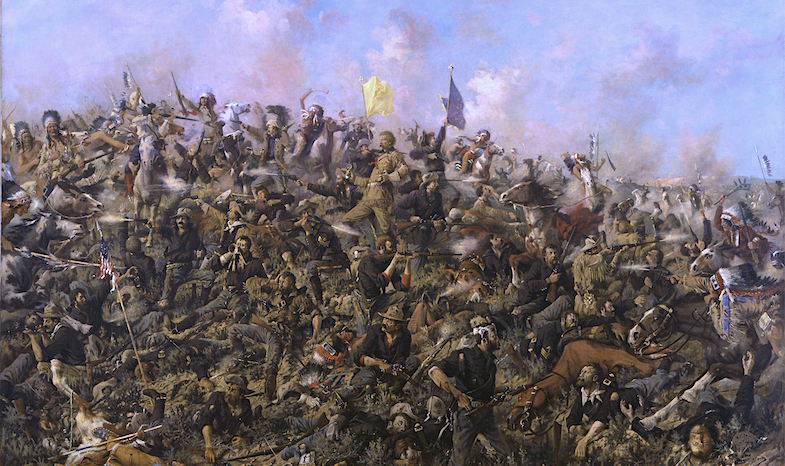
19th-century heroic painting of Custer’s Last Stand by Edgar Samuel Paxson.
By Rich Grant
On the morning of July 5, 1876, General Philip Sheridan was touring the enormous Centennial International Exhibition in Philadelphia when he had an extreme shock. The exhibition was the first time a world’s fair was staged in the United States and was part of the gigantic centennial celebration of America’s founding in 1776. Two hundred buildings were constructed to glorify America’s greatness and demonstrate how far the young country had come in just a hundred years. Visitors could see Alexander Graham Bell’s first telephone and the first Remington typewriter; they could enjoy an introductory taste of Heinz Ketchup and Hires Root Beer, both launched at the fair; and for 50 cents, they could even climb up the detached right arm of the Statue of Liberty (which had yet to be erected in New York’s harbor) and stand beneath the torch.
So, when a newsboy ran up to General Sheridan, commander of all U.S. troops in the West, and handed him a copy of a special edition of the New York Herald he looked at the headline and was dumbfounded! “This can’t be true!” he shouted.
The headline read: “General Custer Killed…The Entire Detachment Under His Command Slaughtered…
Little Bighorn Massacre Shocked America
But the story was true. Ten days before, on the late afternoon of June 25, 1876, two thousand miles away on the rolling plains of Montana, high atop bluffs over the Little Bighorn River, General George Armstrong Custer had halted the 210 men of the 7th Cavalry and dictated an order. “Benteen. Come on. Big Village. Be quick. Bring Packs. P.S. Bring Packs.” The order was scribbled and handed to trumpeter John Martin, who grabbed it and galloped off in the direction of Captain Benteen and the left battalion of Custer’s command. As he rode away, the trumpeter turned in his saddle for one last glimpse of the 7th Cavalry. The blue-coated soldiers were galloping down into a ravine, flags flying, the gallant Custer, dressed in buckskins, leading the way.
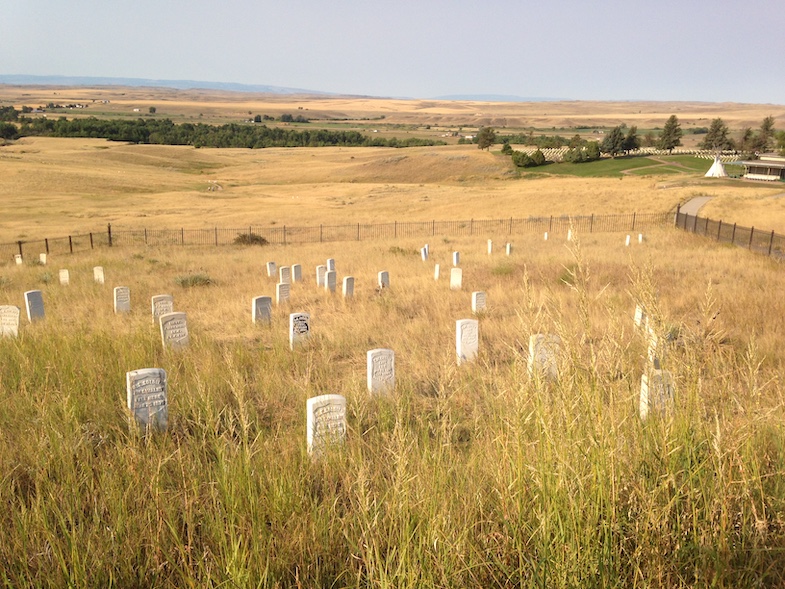
The mutilated corpses of the men of the U.S. 7th Cavalry were buried where they fell and marked with small grave stones. Today, the remains are collectively buried beneath a large memorial, but the stones still mark the places where they fell on Last Stand Hill. Photo by Rich Grant
John Martin was the last soldier to see them. In less than two hours, Custer and all 210 men of his command were dead.
The next soldiers to see the 7th Cavalry were a relief force that arrived on the scene two days later. They found a gruesome and dreadful sight. Scattered over a wide area on several hills were all 210 of Custer’s men… each man lying in the sun, scalped, stripped naked, and often mutilated. One victim had 105 arrows stuck in him.
What happened?!?
That is a mystery that has echoed from the Montana Grasslands to the Philadelphia exhibition in 1876 and even to today, for what will be on June 25, 2026, a total of 150 years. Hundreds of books and magazine articles have been written. Dozens of theories have been advanced. But no one will ever know for sure.
Of course, the Sioux and Cheyenne involved in the battle told stories, but they were not believed. And so, in place of fact in the early years, a legend developed. According to the myth, a courageous but rash Colonel Custer underestimated Indian strength and attacked overwhelming numbers of painted Indian warriors who were camped on the Little Bighorn River. Surrounded, betrayed by his subordinates, Captains Reno and Benteen, who failed to come to his aid, Custer had no choice but to gather his men on what came to be called Last Stand Hill. Here, fighting back-to- back, his soldiers realized they were doomed, but they were determined to sell their lives dearly. Custer, with his long golden hair flowing and two blazing pistols, stood beside the flag and fought to the last bullet.
It was this romantic version of Custer’s Last Stand that became the basis for hundreds of paintings, films, and books.
Unfortunately, very little of it appears to be true.
Uncovering the Truth
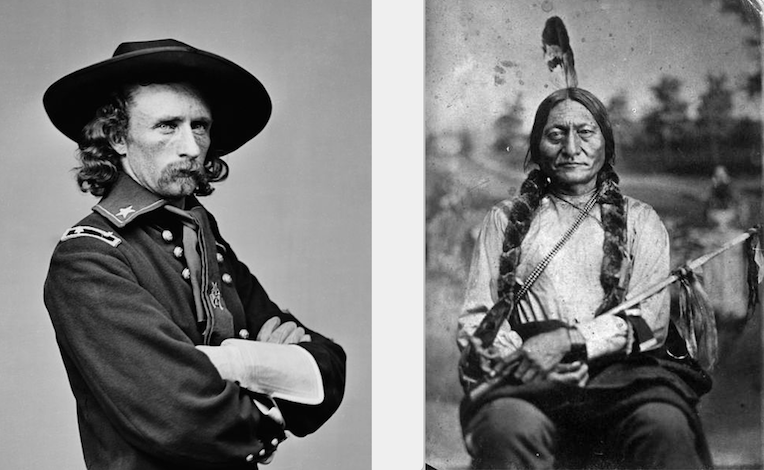
Outnumbered 2,000 to 210, Gen. George Armstrong Custer (left) had no chance of victory when he chose to attack Lakota Sioux Chief Sitting Bull (Right) on June 25, 1876, 150-years ago this month.
Today, a visitor to Southern Montana’s Little Bighorn Battlefield National Monument can learn what many historians, archeologists, and scientists think really happened on that afternoon in 1876. Driving and walking the battlefield, visitors can begin to see the ground, see what each commander could see, read historic markers and form their own conclusions.
The high bluffs along the Little Bighorn River are rolling grasslands with unending views across what Montana calls “Big Sky Country.” But once you know what happened here, it becomes haunted and mysterious ground. The museum at the entrance to the national monument is a good place to begin.
A Unique Battlefield
The Little Bighorn Battlefield is unique in that there are macabre marble markers indicating where every soldier was killed. When the shocked relief force arrived on the scene, they didn’t know exactly what to do. In a hurry because of lurking Indians, they buried every soldier exactly where he had fallen and marked the spot with a wooden cross. Those were later replaced in 1890 with marble markers, and all the bodies were eventually interred in a single grave under a large monument. What was believed to be Custer’s remains were removed and buried at West Point.
But those first initial markers allowed historians to know where every single soldier had fallen in the battle. The lingering question was, how did they get there and why were they scattered in so many places?
Doubtlessly, some bodies had been moved by animals, winds, or time, but still … the bodies had been spread over a large area. Using metal detectors, microscopes and CSI techniques, historians have been able over the years to study thousands of rifle cartridges and bullets discovered on the battlefield. Because each cartridge has a distinctive mark from a firing pin, they were able to trace approximately where each gun was fired, and therefore, where each soldier fought and how well they fought. Coupled with new interpretations of Native American accounts, originally discounted as untrue, this has helped historians piece together the ebb and flow of the battle and develop a very different view of what may have happened.
To understand the full picture, however, you first need some background.
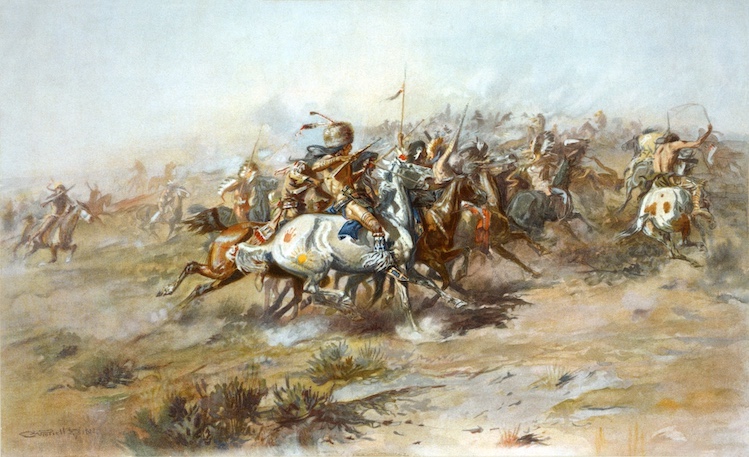
The Custer Fight. 1903 painting by Charles Marion Russell.
Museum Exhibits Set the Stage for Battle
In 1876, several centuries of conflict between Indian and Euro-American cultures were coming to an end. Both whites and Indians had repeatedly broken treaties. Pushed out of their homelands to reservations, frustrated by seeing their way of life threatened, Lakota Sioux leaders, including Sitting Bull and Crazy Horse, were among the last of hundreds of tribal leaders over the centuries to rebel and fight back. In 1876, they moved a large band of 7,000-8,000 Lakota Sioux and Northern Cheyenne off the reservation and into the buffalo-rich country of southeastern Montana in a last-ditch attempt at freedom.
In response, the U.S. government ordered the cavalry to round them up and move them back. Leading one of the attacking forces was the youngest general to emerge from the Civil War, the flamboyant, dashing, and immensely popular George A. Custer.
Strategic thinking in 1876 held that the way to round up Indians off the reservation was to capture the women and children and hold the noncombatants as hostages. Indian villages, if threatened by cavalry, would break up into small groups and scatter. Capture the women, children, and elders, and the warriors reluctant to counterattack would be forced to surrender. Of course, this could result in large numbers of women and children being killed, but that did not deter the U.S. Army.
So, Custer’s main concern on June 25 was not fighting a battle but rather locating and surrounding the Indian camp before they could separate and flee. However, his plans changed when he believed some Indians had discovered the 7th Cavalry first.
Afraid that the Indians, now warned, would disperse, the always-aggressive Custer went on the offensive. He divided the 7th Cavalry into three battalions. Captain Benteen was ordered to search the west side of the Little Bighorn, while Custer and Reno took the main body north along the river. In a few miles, Custer came upon the large Indian camp he was seeking, and although his men were exhausted, the battle was underway.
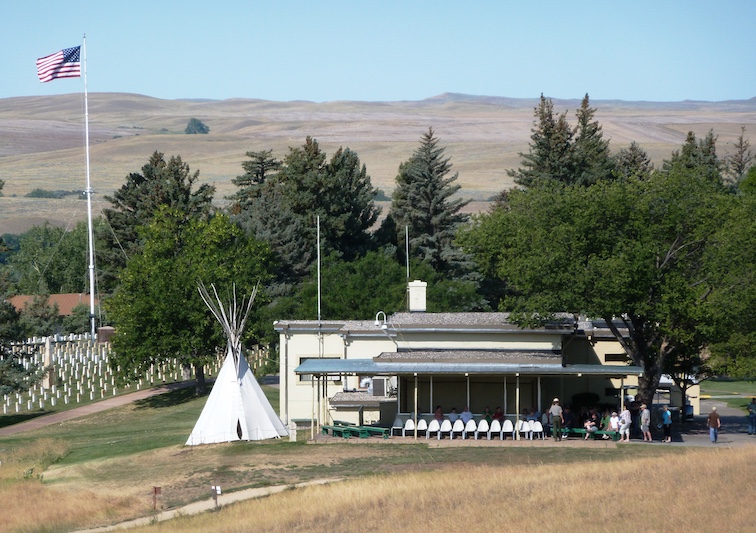
The old Visitors Center at the Little Bighorn was torn down in 2024. A $14 million new one is under construction, but may not be completed in time for the 150th anniversary. Photo by Rich Grant
Custer ordered Reno to attack the camp from the south with one battalion, while he circled around the ridge with the other battalion to hit the Indian village from the north, cutting off their escape and stopping them from fleeing. Based on all previous encounters with Indian soldiers, this was a risky but workable strategy. However, things went awry from the start. Reno’s charge faltered. Instead of attacking straight into the village, Reno halted 200 yards away and formed a skirmish line.
And with good reason. Custer’s intelligence had estimated a village with 800 warriors, but there were, in fact, as many as 2,000 fighting men. Even with surprise on his side, Reno’s 140 men were outmatched and soon forced on the defensive.
At a crucial moment of the firefight, a friendly Crow Indian scout standing next to Reno was shot in the head, splattering Reno with brains and blood. Reno, understandably, appears to have become disoriented. He ordered a retreat that soon became a panicked rout. By the time his command got to a safer position, 40 of his men were dead. Shortly later, Benteen arrived on the scene. With Indians attacking, Reno’s mental state shattered, and his battalion in chaos, Benteen elected to stay put and help Reno’s men. Custer was now on his own.
Custer’s Last Stand
Historians can never be certain, but based on archeological evidence, this is what many think happened. Unaware of the outcome of Reno’s attack, Custer remained on the offensive and rode north to attack the village from its upper reaches. By the time he reached the encampment, however, the women and children already had fled.
Still aggressive, Custer divided his force into two wings. The right wing held what came to be called Calhoun Hill, named after 1st Lieutenant James Calhoun, Custer’s brother-in-law. Custer led the left wing in search of a new ford farther north from which he could still capture the noncombatants.
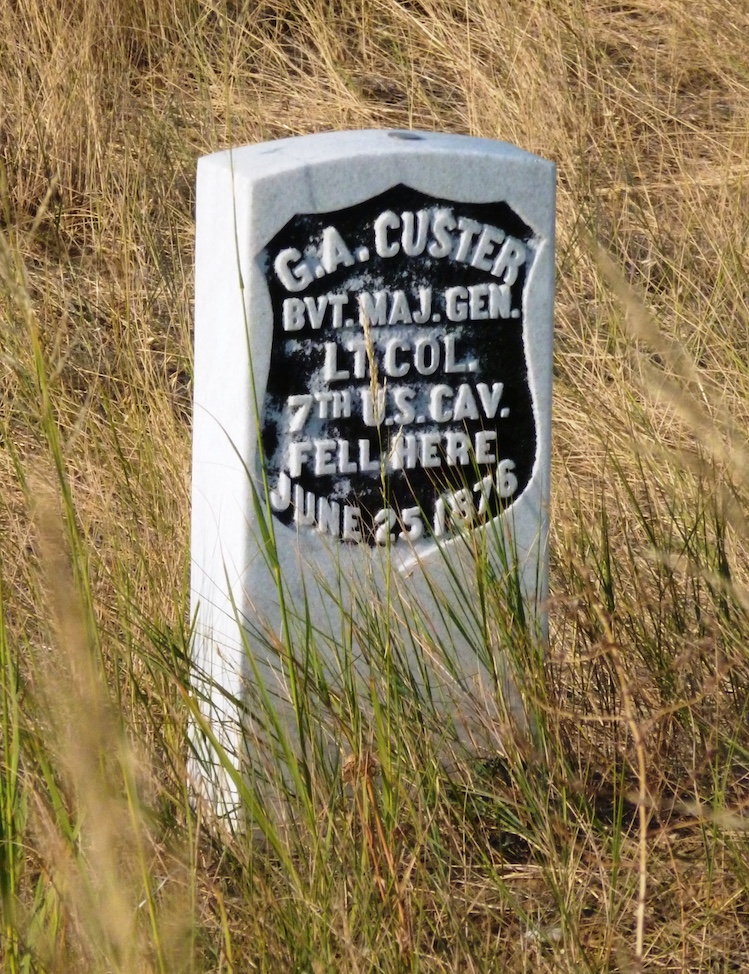
Stone marking where Custer fell in battle. Photo by Rich Grant
From archeological evidence, historians know the right wing formed a skirmish line. Tactics of the time called for men to stand five yards apart in a line, and archeologists found shell casings consistent with a defensive line. But as more Indians left the Reno fight and turned their attention to Custer’s men, the pressure on the right wing intensified. Men in battle who become fearful tend to bunch together. Shell casings on the ridge indicate that as the men fell back, “bunching” started to occur.
Men in panic seldom fight back. They might even throw away their guns as they run to what they perceive as a safer place. This is apparently what happened to the right wing. Overwhelmed by superior numbers of Indians, the soldiers gave way to panic and fled. Indian accounts of the battle spoke of the soldiers running like a buffalo stampede, throwing away their guns and crying like babies.
The Custer legend depicts soldiers in this part of the battle fighting while retreating to Last Stand Hill. The lack of gun casings in the area and the high number of marble markers lead archeologists to believe that panicked soldiers fleeing were shot as they fled.
As you stand on Calhoun Hill and see the white marble markers stretching out across the grassy slopes, each indicating the spot where a soldier fell, you can feel those awful moments and get a sense of the terror the men must have felt.
Custer, meanwhile, had found his river crossing to the north, but he had too few men to capture the village. Still confident, he turned south to collect the rest of his troops (and hopefully Benteen’s battalion) and arrived at a viewpoint just in time to see the horrifying collapse of the right wing. Custer, with just 85 men, raced to Last Stand Hill to offer support. Only 20 men from the right wing survived to join him. Now, with half his men dead, surrounded, in dust and confusion, Custer would have realized for the first time he was no longer on the offensive and was instead cut off.
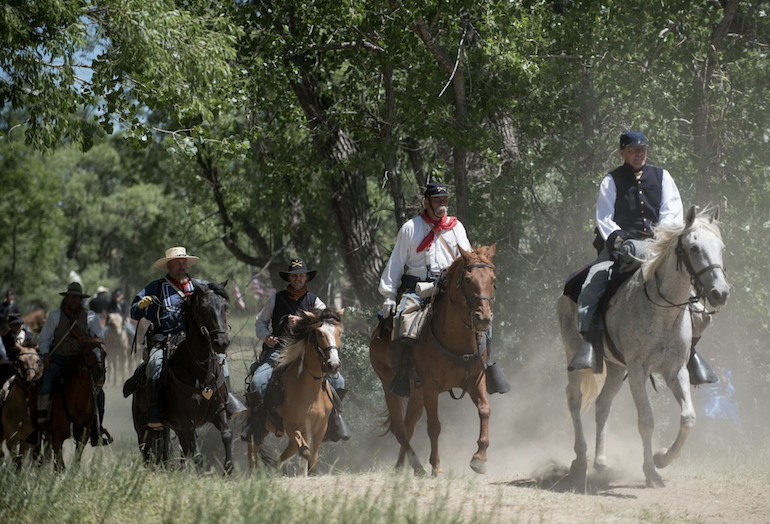
The 150th Reenactment of the Battle of the Little Bighorn will take place on June 26-28, 2026, with dozens of authentic reenactors. Photo courtesy of Montana Department of Commerce, visitmt.com
The end came swiftly. Rather than fight to the last bullet, nine men tried to escape by horseback to the south. All were killed. Another 45 tried to break out toward the river, but they too were sought out and killed.
Rather than circling Custer on horses as depicted in movies and paintings, huge numbers of Sioux dismounted and crawled toward the soldiers hiding and firing from the tall grass.
Flanked by his two loyal brothers, a beloved nephew and some 50 other troopers, Custer killed all their horses to make a defensive barricade. But it was quickly overrun. From shell casings, historians think the final battle lasted just minutes, not the long, protracted battle of films.
Who was to blame?
The easiest answer is that Custer didn’t lose so much as the Indians won. They had vastly superior numbers, they were fighting for their homes and families, and were brilliantly led by chiefs Crazy Horse, Lame White Man, and Gall.
Certainly, Custer was let down by Reno, who did not press his charge on the village, and by Benteen, who did not “come on,” as ordered. Had Reno and Benteen come forward, they might have suffered the same fate as Custer. However, under the strict guidelines of the 19th-century army, they must take some blame for failing to follow orders, even if those orders led to disaster. History has been harsh in its judgment of them.
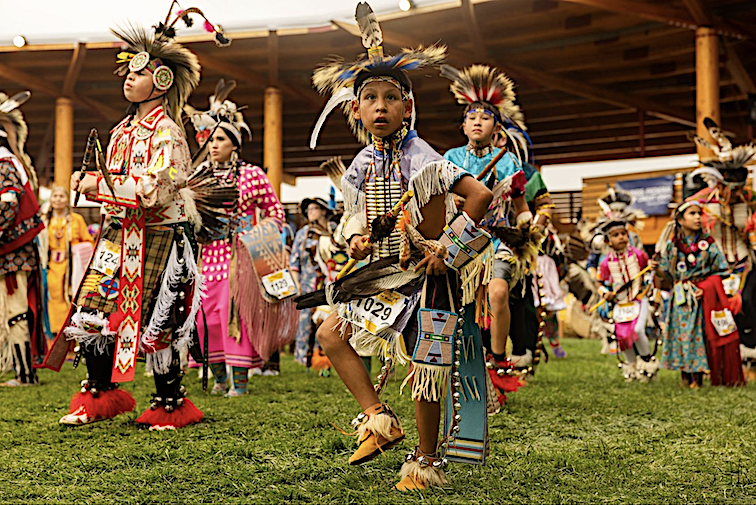
The Crow Fair Days near Little Bighorn (August 14-16, 2026) has a daily parade, an all-Indian rodeo, and many other events. The Crow Agency is known as the Tepee Capital of the World, with more than 1,500 tepees erected for the event. Photo courtesy of Montana Department of Commerce, visitmt.com.
As it has been on Custer. Custer divided his force in the face of uncertain numbers, fought on unfamiliar ground, and, as commander, he bears the ultimate responsibility. Throughout the Civil War and the Indian wars, he fought several battles in similar circumstances and always came out on top. At the Little Bighorn, his luck ran out.
As it did for the Indians. Though victorious here, they were defeated within three years and forced back to the reservation. Both Crazy Horse and Sitting Bull were murdered in unusual circumstances by white and Indian guards. Little Bighorn proved to be the high point…and the beginning of the end for the free Plains Indians. Within a few years, everything changed for everyone who fought at the Little Bighorn. Only the battleground remained the same. It is, and always will be, a strange and haunted place.
IF YOU GO:
Part of the appeal of Little Bighorn Battlefield is that it’s in the middle of nowhere, surrounded by mile after mile of unchanged grassland. The closest place to stay is Sheridan, Wyoming, about an hour away. The battle is re-enacted near the battle site on the Crow Agency reservation every year on the weekend closest to June 25. This year promises to be a special event for the 150th anniversary.
The 150th anniversary of the engagement and will take place on the adjacent Crow Agency land at 1 p.m. on June 26-28, 2026. The National Park Service will also have special events and lectures on June 25-27, 2026.
The nearby Crow Agency is a must visit. This is the governmental headquarters for the 11,000 members of the Crow Nation Native. From here, you can book tours of the battlefield led by Native Americans. The Crow Fair, August 14-16, 2026, typically features a daily parade, an all-Indian rodeo, evening powwows, and horse racing. The event is called the “Tepee Capital of the World,” with some 1,500 tepees erected for the event.
Also nearby, the town of Garryowen, which has a population of 2, one log cabin trading post, a small museum, and hundreds of battlefield souvenirs.
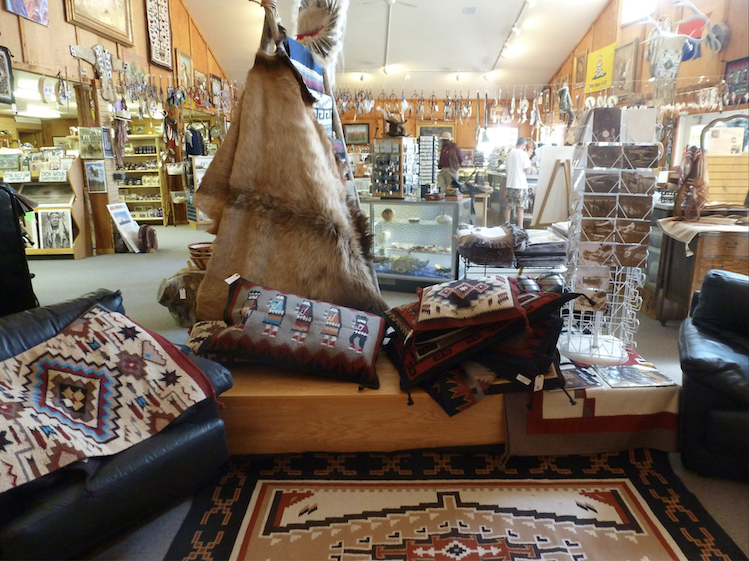
The closest town to the Little Bighorn battlefield is Garyowen, Pop. 2. Aside from soft drinks and snacks, the only things you can buy there are Native American souvenirs. Photo by Rich Grant
Sheridan is part college town, part Wild West, which makes for an entertaining combination. There are several chain motels near the highway. The Mint Bar on Sheridan’s main street is a must stop. The saloon dates back to 1907 and the walls are covered with historic photos, guns, and stuffed animal heads. This is a true cowboy bar, attracting as many real ranchers as tourists.
For a more interesting Old West experience, stay in Buffalo, Wyoming, about 1.5 hours from the battlefield. This classic 1890’s town was known as the “Rustler’s Capital” because Butch Cassidy and the Sundance Kid’s Hole in the Wall hideout was nearby. The town figured prominently in the Johnson County War between big cattlemen and rustlers.
Today, it retains its Old West character, with a main street lined with historic buildings that now house Western art galleries and tourist shops, interspersed with authentic ranching stores.
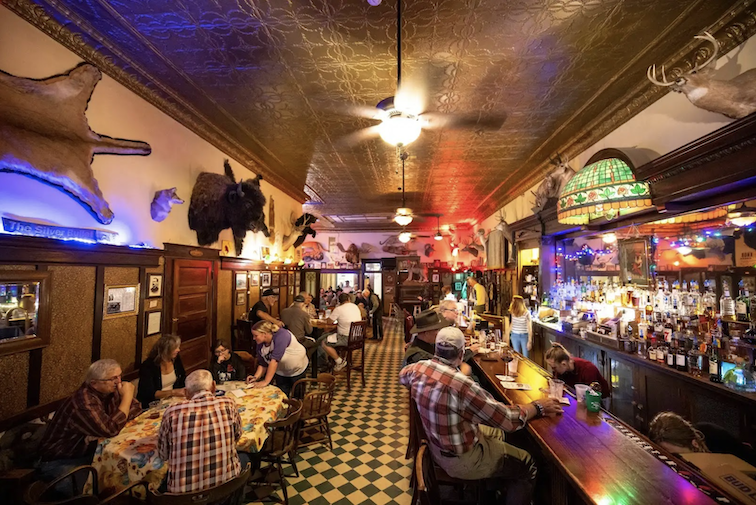
The Occidental Saloon in Buffalo, Wyoming, is worth a trip alone. Buffalo is a great Old West small town with big history and a great place to stay when visiting the battlefield. Photo courtesy of Johnson County Tourism
Stop by the Occidental Hotel and have a beer at the same bar that has hosted Buffalo Bill, Calamity Jane, Annie Oakley, Butch Cassidy, Teddy Roosevelt, and Ernest Hemingway. The bar staff are friendly and love talking about the saloon’s history.
The operating hotel also serves as a museum, offering tours and historic photos of its famous guests. It’s believed that the 25-foot-long bar served as the inspiration for Owen Wister’s novel, “The Virginian,” which included the first written description of what was destined to become a Western classic – the quick draw gunfight. 
Rich Grant has visited every major battleground of the American Revolution, the War of 1812 and the Civil War. He also has followed the great Sioux and Cheyenne wars from Sand Creek to Wounded Knee. In his spare time, he works at a horse rescue in Franktown, Colorado. Please accompany Grant as he visits historic taverns and enjoys some downtime in Deadwood, South Dakota.