

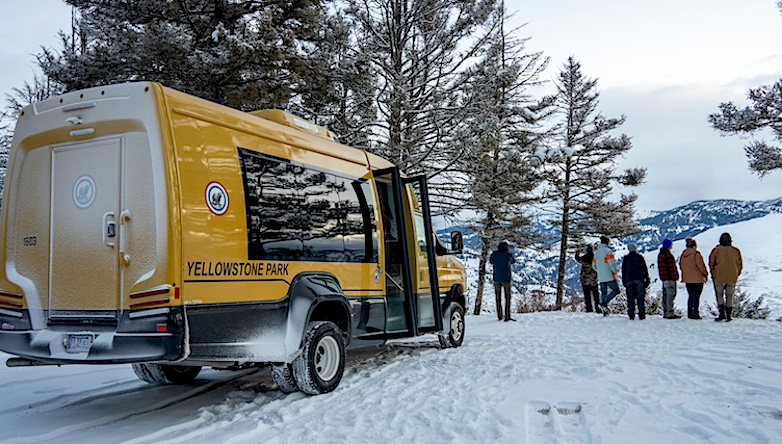
New winter arrivals take their first look at Yellowstone National Park while their yellow Snowcoach waits to drive them to the Old Faithful Snow Lodge. Photo by Barbara Noe Kennedy
On a dark, frigid winter evening in Wyoming’s Yellowstone National Park, our snowcoach – a 13-passenger vehicle specially outfitted for navigating the park’s snowbound roads—watching swirls of snow dance in and out of the headlights We rounded an inky bend somewhere between Black Sand and Biscuit Basin, and there, at the edge of the snowy forest, stood a gray wolf.
I might have missed it if a fellow passenger hadn’t given a subtle nod. The six of us slowly turned our heads and fell silent. The wolf, a member of Yellowstone’s Wapiti Lake pack, had run in front of us and now lingered at the edge of the shadows, watching us as intently as we watched him.
There was no one else on the road that night. No cars stacked behind us. No headlights approaching from the other direction. No reason to move along.
So, we didn’t.
This is the Yellowstone most visitors never see.
When Winter Takes Over
Summer Yellowstone is famously crowded, averaging more than 936,000 recreation visits in July over the past decade—roughly 30,000 a day. Then the deep snow and bitter cold arrive, and the park empties. February, the busiest winter month, has averaged just 41,000 visits over the same period, or about 1,460 a day. The park’s workforce shrinks along with the crowds, dropping from approximately 750 employees in summer to just 392 in winter.
“Yellowstone in winter is a completely different national park from summer,” said Rich Jehle, an interpretive ranger who has worked at Yellowstone for more than 30 years.
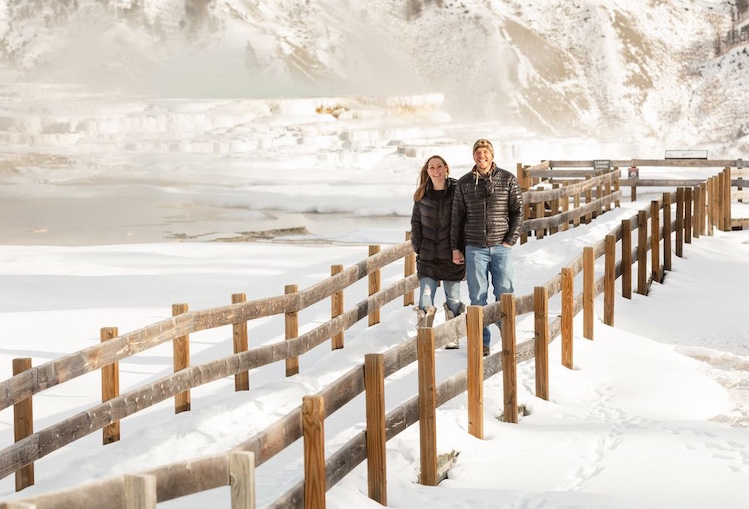
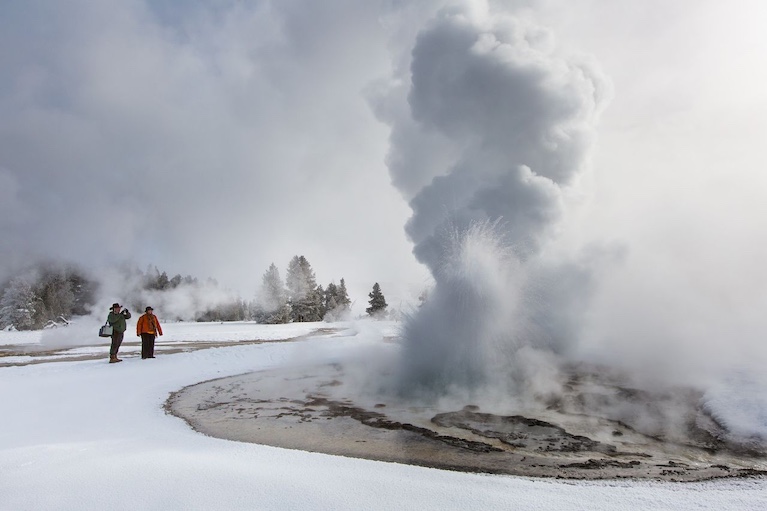
At Old Faithful, I stood with just five other people as the geyser erupted into the misty gray sky, its roar breaking the afternoon stillness. “In summer, there can be 5,000 people here,” Jehle said.
But ice didn’t reign everywhere. Hot springs and mud pots refused to freeze, bubbling beneath great clouds of steam.
“The meeting of cold air with the 10,000 hydrothermal features makes the landscape surreal,” Jehle said. “You can’t experience that anywhere else.”
Where the Wildlife Gathers
Then there is the wildlife. In winter, many animals, including bison and elk, descend from the high country to lower valleys, where movement is easier. “They follow the river corridors, which is also where the park’s roads run,” Jehle said, “so they’re more easily seen.”
That concentration of prey attracts predators—including wolves. Thermally influenced stretches of rivers, including the Firehole, remain ice-free even in bitter weather, drawing trumpeter swans and other waterfowl. Occasionally, bobcats follow. “Seeing a bobcat is rare enough,” Jehle said, “but seeing them in winter, stalking waterfowl ….”
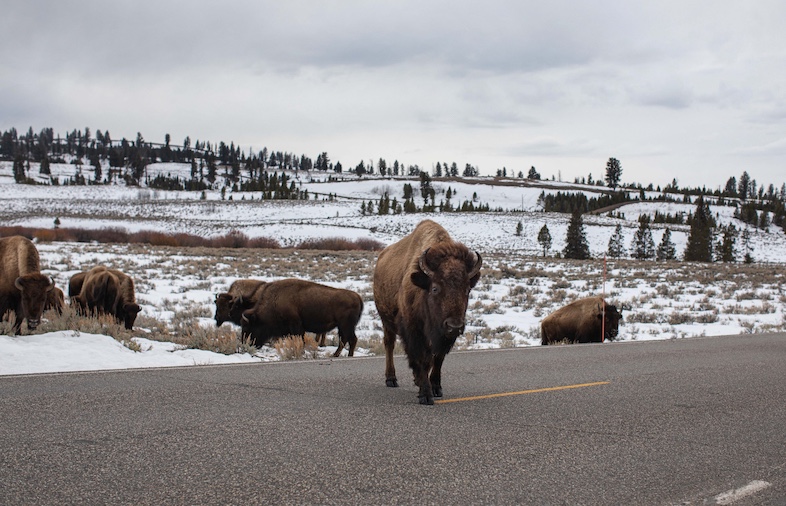
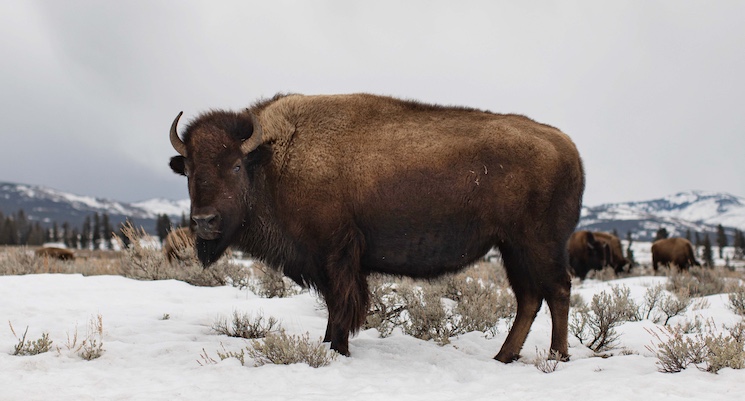
Over several day excursions by snowcoach—specialized oversnow vehicles with enormous, low-pressure tires—I spotted a bald eagle watching from bare branches, and American dippers plunging into icy streams. Then a herd of bison swallowed our vehicle. Massive adults lumbered past the windows, close enough to see frost clinging to their coats, while calves kicked through the snow around them.
We could do nothing but sit and wait. And watch.
“Seeing a herd of bison walk down the road when it’s well below zero is quite remarkable,” Jehle said. “Sometimes you turn a corner, and they’re bedded down right on the road.”
Cozy inside the snowcoach, I began to understand that winter wasn’t merely scenery. It was something every animal had to negotiate.
Interpretive guide Gus Murray, who has worked multiple winter seasons, summed up winter survival in three strategies: “Endure winter like bison, avoid it like birds that migrate, and hide from it like bears.”
In Yellowstone, winter determines where the animals go, how they move, and what they must do to survive. And if you want to see that world, you have no choice but to let winter set the pace.
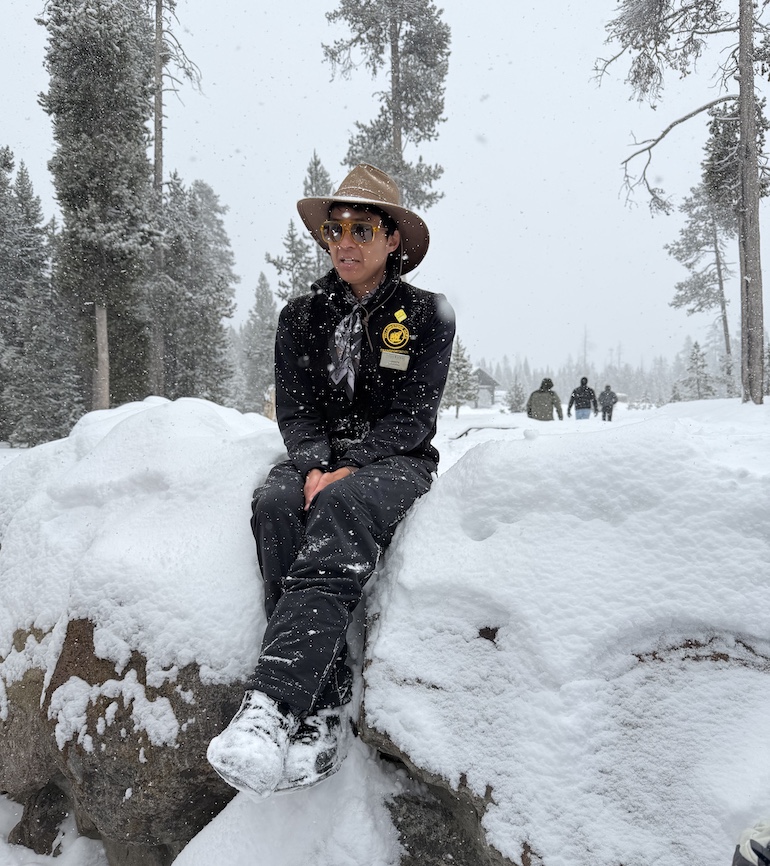
Yellowstone park ranger Gus Murray sits on a Snow Throne counseling visitors to the best ways to endure the winter cold. Photo by Barbara Noe Kennedy
Slowing Down
John Wallingford, a Yellowstone interpretive guide since 2004, said visitors’ biggest mistake is trying to “do Yellowstone in a day.” Choose one thing instead, whether an animal, a waterfall, or a ridgeline, and stay awhile. Winter almost forces you to.
Snowcoaches crawl through the snowy interior at around 20 miles an hour, pausing frequently for wildlife or photographs. Gradually, the day stops being about ground covered. The quiet settles in, and you begin to hear what a summer crowd would drown out: wind in the trees, boots crunching over snow, a raven calling somewhere in the forest.
Jehle has heard that change for decades. “It’s amazing how silent Yellowstone can be when there’s no motorized traffic,” he said. “The sounds of the natural world can be deafening.”
That may be the real secret of the season: the park hasn’t gone quiet; it’s just finally audible.
When Darkness Falls
Steam billowed from the thermal pools into the winter night, curling around me before disappearing into the darkness. Above it, thousands of stars glittered against an inky sky, close enough to touch.
This was Yellowstone after dark, on a winter-only “Steam, Stars, and Winter Soundscapes” tour. At one stop, I stood in near-total darkness, the pines reduced to black silhouettes. Our guide, Rachael Foote, urged us to rely on more than sight.
“At night,” she said, “Yellowstone asks something different from us: listen more closely. Smell the air. Let the silence become part of the experience.”
At first, I heard nothing. Then came a gurgle from somewhere in the blackness. Then another, deeper this time.
By the time we turned back toward the snowcoach, my heart was beating a little faster. I never found out what made that sound. It sent a little chill through me—not fear, exactly, but the thrill of something just beyond sight.
Wildness by Design
There is a paradox at the heart of Yellowstone’s winter wildness. The solitude feels wild, but it isn’t entirely by accident. So how much comes from winter itself, and how much from park management?
“Some of both,” Jehle said.
Winter does much of the work on its own. Even before 2003, when the park began limiting snowmobile numbers and phasing in guide requirements, winter visitation was a fraction of summer’s. “It’s more difficult to visit than in summer,” Jehle said. “It takes some effort to get here in the first place, and then to access the park.”
Design does the rest, beginning with the roads. The only route open to regular vehicular traffic in winter runs from the North Entrance through the Northern Range and Lamar Valley to the Northeast Entrance, which sits at a lower elevation and gets less snow, so it’s easier to plow. The interior is higher and far snowier, so the park lets snow accumulate and packs it into routes for snowcoaches and snowmobiles. “Maintaining the park roads in the interior would be hugely expensive and very difficult,” Jehle said.
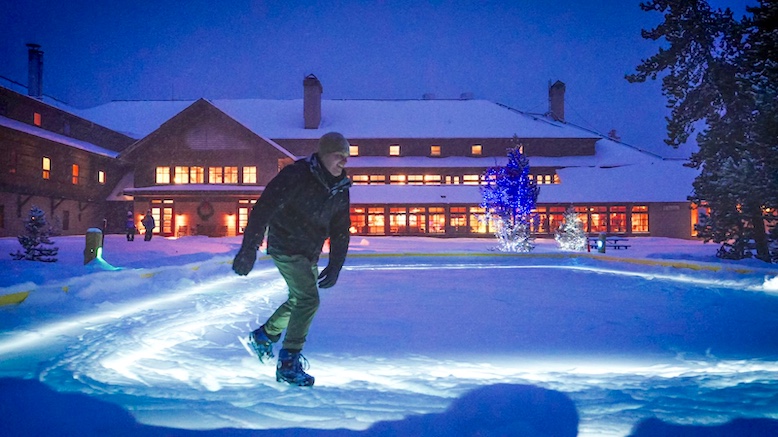
That restriction has a price. Only two park lodges stay open in winter, Mammoth Hot Springs Hotel & Cabins near the North Entrance and accessible by car, and Old Faithful Snow Lodge, deep in the park’s interior, reachable only by reserved snowcoach or snowmobile.
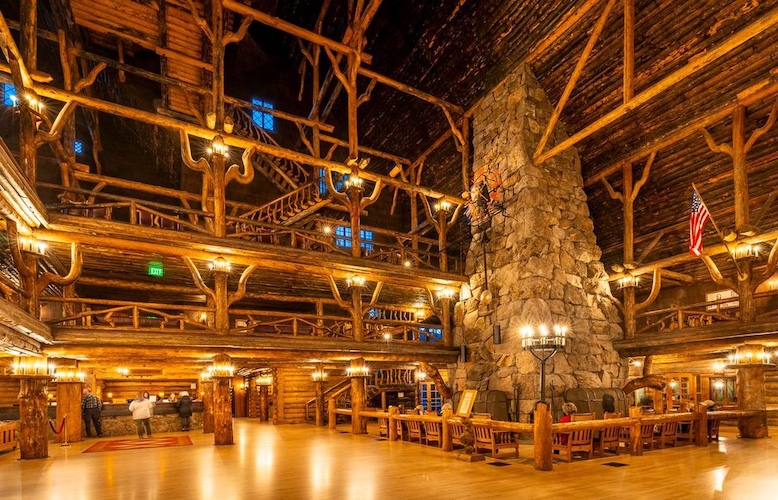
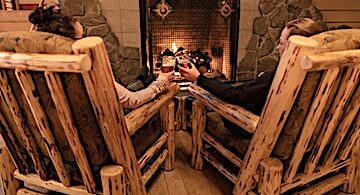
Mammoth brims with old-fashioned charm, from its historic guest wing dating from 1913 and famous Map Room to the bison and elk that often graze out front. At Old Faithful, a massive stone fireplace and exposed timber beams equally conjure bygone days, despite having been built in 1999. Nightly rates range from $193 to more than $1,000 at Mammoth and from $220 to more than $887 at Old Faithful. Even day trips into Yellowstone’s winter interior can be costly and require advance reservations. Experiencing the park at its quietest demands more time, planning, and money—but for those willing to make the investment, the rewards are extraordinary.
And that is the trade-off at the heart of Yellowstone’s secret season. The very things that make winter Yellowstone difficult to reach—the snow, the closed roads, the limited transportation—also preserve what makes it extraordinary: the stillness, the space, the chance to stop without a line of impatient cars behind.
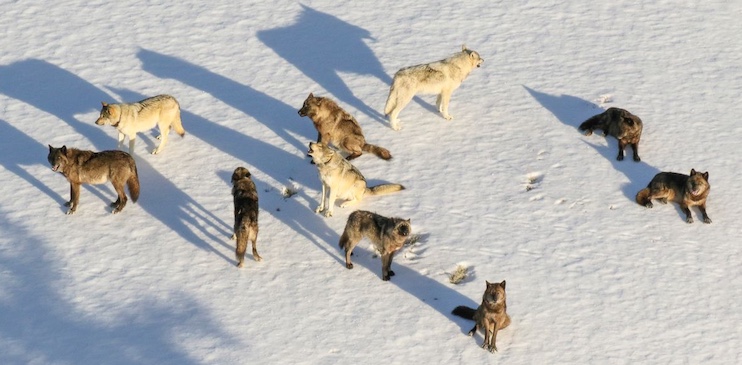
Back on that dark road between Black Sand and Biscuit Basin, I understood what that emptiness made possible. For a few moments, the wolf remained at the edge of the snowy forest, watching us from the darkness. No one told us it was time to go, so we stayed.
Then the wolf turned, slipped between the trees, and vanished into the Yellowstone night.
Barbara Noe Kennedy is a former senior editor at National Geographic Travel whose recent stories for the East-West News Service examined Turkey’s Olive Oil Revival and the secrets of Austria’s Salt Road.