

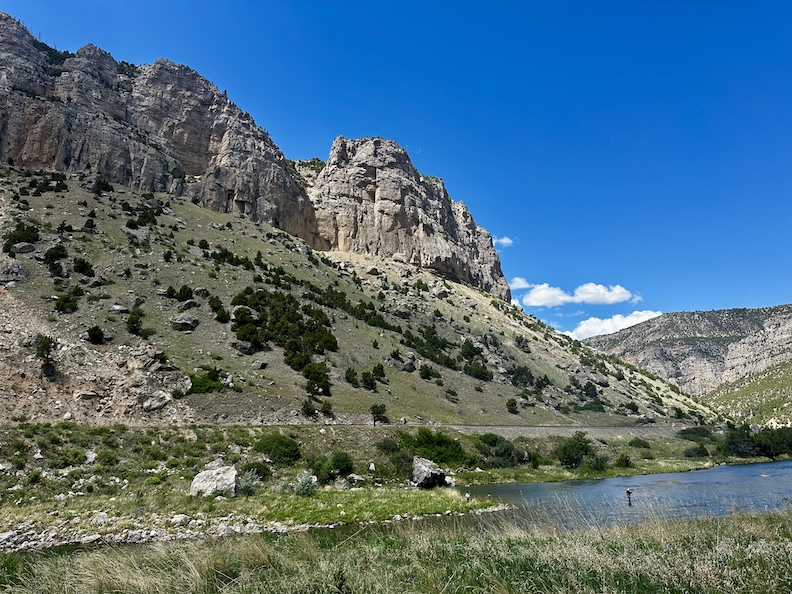
Synopsis — In a quiet corner of Wyoming, the Old West never had to be rebuilt, because it never left
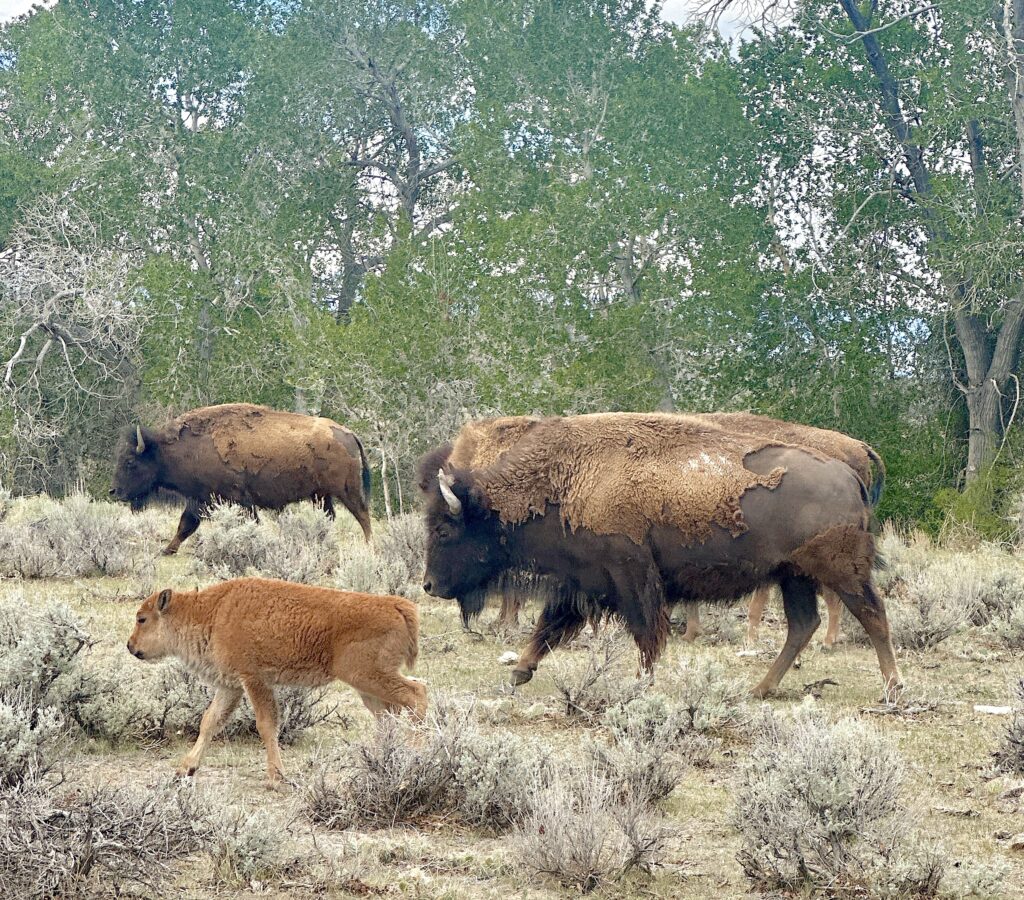
On a reservation in central Wyoming, a herd of bison moved across open grassland the way water moves down a hill, slow and certain and exactly where it meant to go. The mothers lifted their heads at the sound of an approaching vehicle and held their ground while their calves played tag in the spring grass.
For 131 years, no bison grazed this land. Then they came home. Visitors who stand in that grass with the engine off, watching animals that railroads and market hunters nearly erased from the continent, are looking at something rarer than a sepia postcard of the past. They are seeing a resurrected corner of the old American West.
This is Wind River Country, a vast sprawl of high desert mountains and plains that stretch across west-central Wyoming’s Fremont County. The pristine region buffers the Wind River Indian Reservation, home to the Eastern Shoshone and Northern Arapaho. Here, towns are small and few, with names like Riverton, Lander, and Dubois.
Wyoming’s famous destinations lie just over the western horizon. Yellowstone has its geysers and the Tetons their jagged peaks, and most of the millions who pour into the state each year keep their foot on the gas until they reach them. A visitor flying in from Frankfurt, Singapore, or São Paulo with one American summer to spend might fairly ask why anyone would stop here at all.
The people who know this country answer with a single word: authentic. Helen Wilson, who runs the Wind River Visitors Council, has watched travelers discover that for themselves.
“Jackson has everything,” she says. “It’s also very, very crowded and very, very expensive. So, what we find is that a lot of people who come for the Wyoming experience and want the outdoors and the wildlife, initially go to Jackson. But before long they decide they don’t really want to be there, and head this way.”
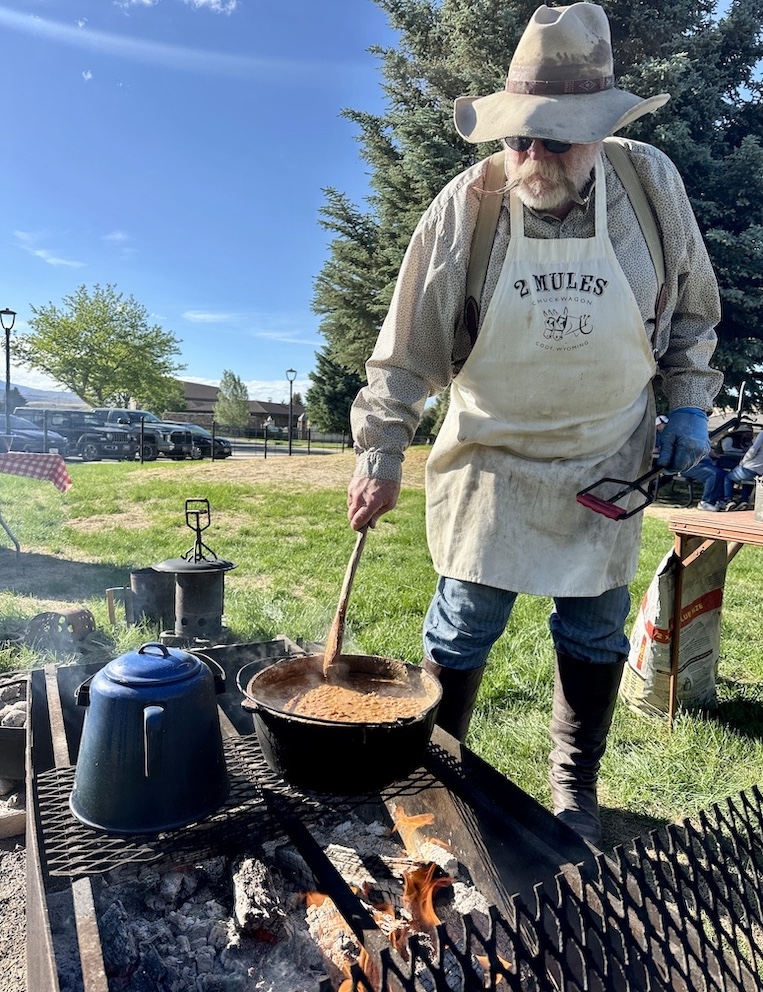
Cody, to the north, wears its Wild West history well, but it has been polished for the people who come to see it. Wind River Country has never been polished, because nobody thought to.
This is the American West roughly as it was a century ago, give or take the paved roads and gas stations. Land runs to the horizon in every direction. Pronghorn spook across the highway, and drivers learn to watch for them the way city drivers watch for taxis. A small-town rodeo still draws the whole county on a Saturday night. The wind never stops, and a person can drive for an hour without meeting another soul, which in this crowded century is its own kind of luxury.
The Bison That Came Home
The herd is the work of one man’s stubbornness and a tribal nation’s patience. In the late 1990s, Jason Baldes, an Eastern Shoshone, traveled to Africa and stood in the middle of the great wildebeest migration.
“What I saw there was less than 5% of what the bison used to be here, less than 200 years ago,” he said. “Thirty to 60 million buffalo once moved across North America. They were wiped out. Once, they were everywhere here.”
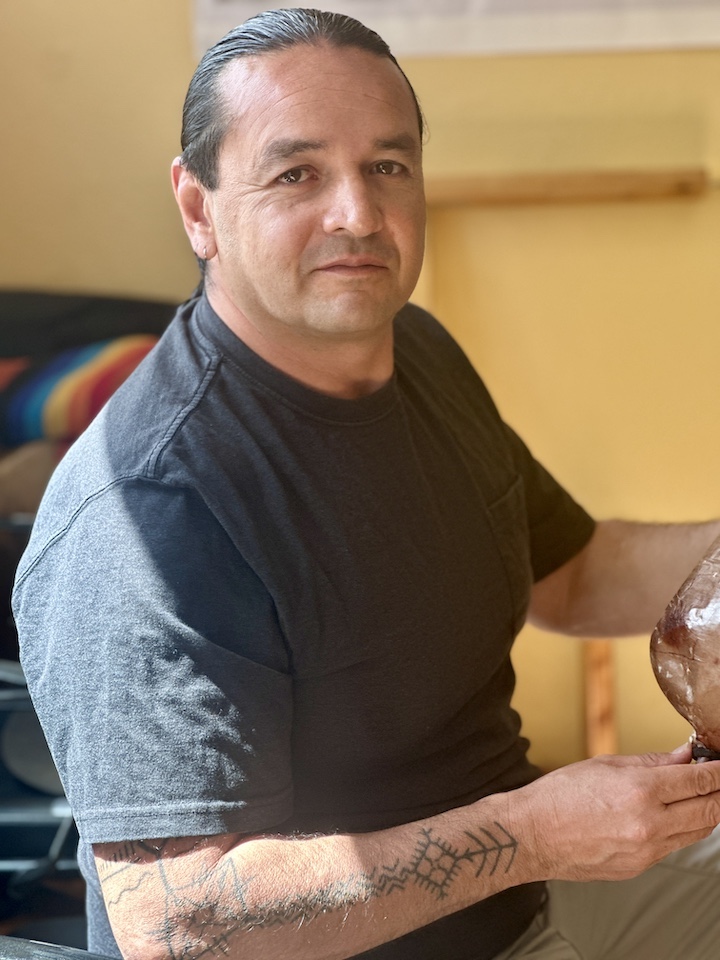
He spent a decade in Montana earning his degrees, then came home to Wyoming. The November after he finished his graduate thesis, the first 10 animals arrived from a wildlife refuge in Iowa.
What grew from that beginning is neither a petting zoo nor a charity case. The Wind River Tribal Buffalo Initiative, founded in 2023, is a tribally led enterprise that buys back reservation land parcel by parcel, restores habitat, runs youth and education programs, and manages a herd that, with this year’s calves, will number around 350 across both tribes. It also does the unglamorous work, from soil sampling to fundraising that has drawn millions from private donors. Baldes now leads a staff of a dozen, including youth coordinators, a finance lead and a biologist who oversees ecological monitoring.
At the heart of it all is a fight over a word. Bison here are being restored not as livestock but as wildlife, a legal distinction that carries enormous weight.
“We’re restoring them as wildlife and trying to create a corridor for migration and connectivity to the greater Yellowstone ecosystem,” Baldes said. “We’re trying to change the paradigm of thinking of buffalo like livestock to more like wildlife.”
The Initiative is building toward the public, too. A $9 million, 14,000-square-foot headquarters broke ground in November 2026 and is slated to open in fall 2029, giving the operation a permanent home where it can welcome visitors on its own terms.
Until then, travelers must book through the Initiative’s website, www.windriverbuffalo.org, where a calendar of scheduled tours keeps each group accounted for. There is no walk-up gate, so reserve well ahead.
A Box of Wild Crayons
From the bison range, the road leads to another herd entirely. North of Lander, the Wind River Wild Horse Sanctuary offers something no other sanctuary in the country can claim: it sits on a reservation, and its tour vehicle carries visitors straight into the middle of the herd.
Roughly 250 mustangs live out their days across 1,400 acres of working ranchland. The federal government rounded them up off the open range, and a local veterinarian agreed to take them in. These are the horses deemed too feral, too old, too sick or simply unadoptable.
Standing among them is like opening a box of weathered crayons left out in the sun. Centuries of mixed bloodlines, descended from Spanish horses turned loose on the continent long ago, have produced animals of every color and size: a draft-built bay the size of a sofa, ghostly white mares, gray horses spotted like ink bled onto a damp page.
They stand close enough to touch, though touching is neither the point nor allowed. Healthy, watchful and utterly themselves, they let the wind move through their manes while visitors forget to take photographs.
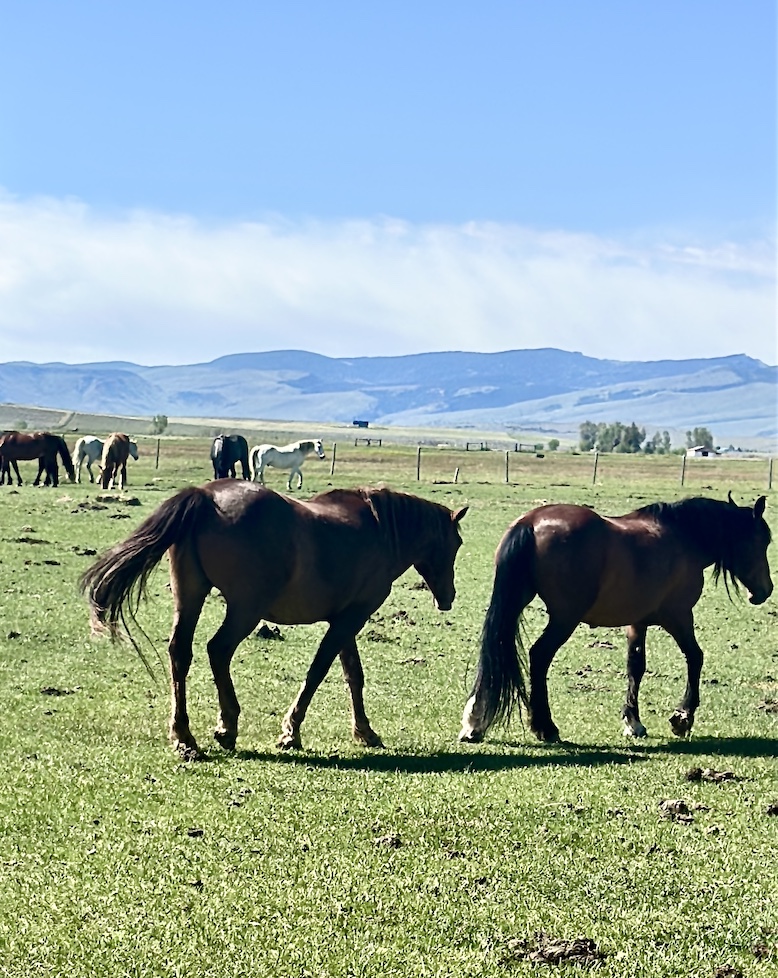
The sanctuary sits about 20 minutes north of Lander off U.S. 287. Tours cost roughly $46 per person, plus a gratuity for the guide. In summer, reservations can be made up to an hour ahead at windriverwildhorses.com, and walk-ins are welcome as long as they arrive before closing.
The River That Vanishes
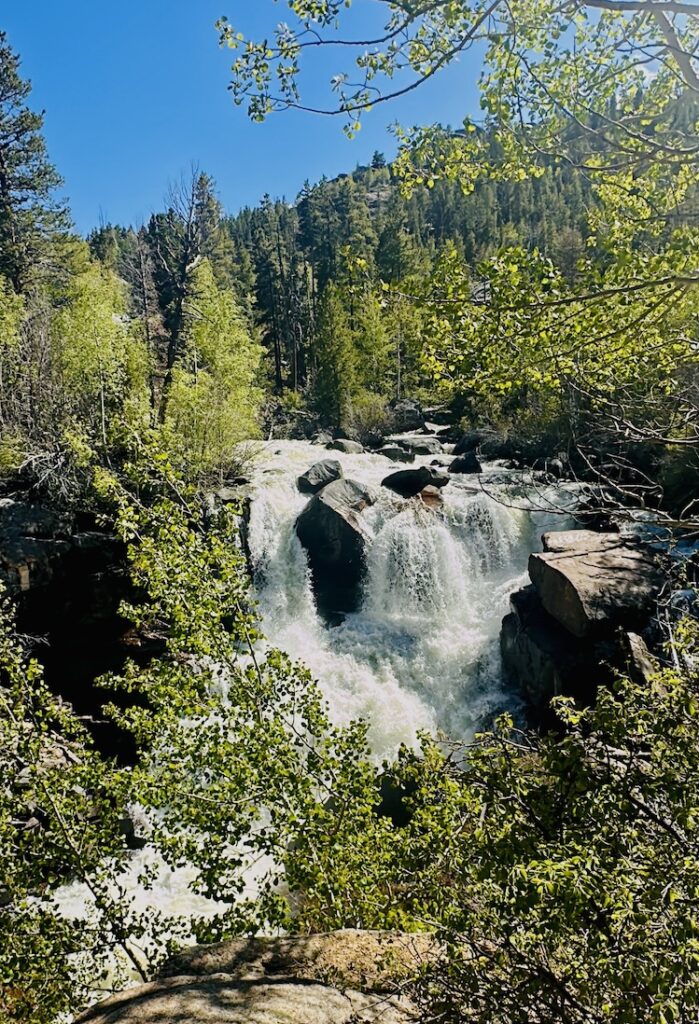
Just outside Lander, Sinks Canyon State Park holds one of the genuine mysteries of the American West. The Popo Agie River comes roaring down the canyon and then disappears, swallowed by the mouth of a cave called the Sinks. Roughly a quarter mile downstream, it wells back up from the earth in a calm green pool called the Rise. For centuries, no one could say how the water traveled in between.
They still can’t, said park superintendent Jessica Moore.
“When they did the dye test, it took about two hours for color to start coming out down at the Rise,” she said, a trip that should have taken minutes had the water run straight. “More water comes out at the Rise than goes in at the Sinks, and it comes out warmer, which means somewhere in the dark it is mixing somehow and going somewhere. It’s still a big mystery.”
Hiking trails climb from the canyon floor toward the high country of the Wind River Range, a corridor people have traveled for 9,000 years.
The canyon’s sun-warmed limestone walls have made it one of the West’s best climbing grounds, where even in winter the rock holds enough heat to keep fingers working. Every July, climbers converge on Lander for the International Climbers’ Festival, founded in 1994 and billed as the oldest climbing festival in the world, then spill out to the crags of Sinks Canyon and Wild Iris.
Instead of roped-off overlooks and ticketed queues, visitors find a dramatic mountain canyon they can simply walk into, gaze up at and have largely to themselves.
The Painted Hills and the Bighorns
Up the road in Dubois, the country climbs higher and grows stranger and more beautiful with every mile. Whiskey Mountain above town shelters the largest wintering herd of Rocky Mountain bighorn sheep in the country, and the modest National Bighorn Sheep Center on the main drag teaches visitors how and where to train their eyes.
In summer the rams drift up into the high rock, and the best way to follow them is the old way: on horseback, through the eroded badlands locals call the Painted Hills.
Dan Martin is the man to take you there. He runs Martin Outfitters from the Longhorn Ranch Lodge, and there is a stillness about him, a sureness that settles a nervous first-timer before a boot ever finds a stirrup.
This is his country in the deepest sense. In the cold months, he packs hunters far into the wilderness after elk, reading weather and sign the way a sailor reads water. In summer, he turns that same patience toward children as young as 6, leading them around basecamp on gentle ponies. He knows which folds of the hills the bighorns favor and which hour lights the rock best.
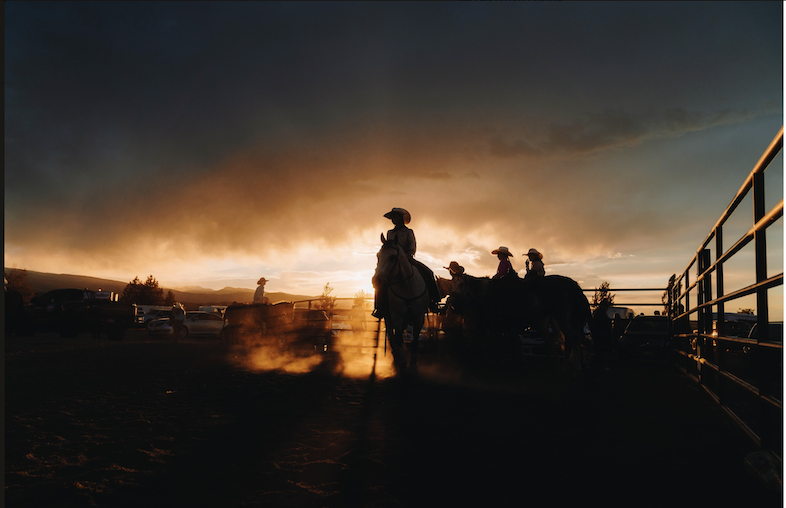
Lander serves as the gateway to the Wind River Range, a part of the Rocky Mountains that includes the state’s highest peak. These glaciated, stony summits have an impressive network of trails ideal for both day trips and multi-day journeys, as well as rock faces popular with climbers. Photo by bradytilldeath
No one needs to have been raised in the saddle, because the horses know the way better than any of us. On my ride, a mule deer exploded from behind a boulder and sent my sure-footed mare spinning and bolting across the flat. I kept my seat only because she gathered herself, thought better of it and settled.
No bighorn showed itself that afternoon. Instead, the hills offered their own towering artwork: sandstone and clay eroded into ridges and spires that glow rust, rose and bone-white under a sky too big to take in at once. A horned toad sunned itself on the trail like a small dragon set out to guard the place.
Wolves, black bears and mountain lions move through this high country as well, though they keep to the timber and the heights, and a person counts it luck to find even a track pressed into the dust.
An Empire of Steel in the Sagebrush
Dubois also holds a surprise that makes no sense until a visitor walks through the doors. On the highway near town stands the National Museum of Military Vehicles, a privately funded hall spanning 160,000 square feet that houses the largest private collection of U.S. military vehicles on public display anywhere in the world. More than 500 fully restored vehicles, from the Spanish-American War to the present day, make up the collection, with close to 350 on exhibit at any given time.

This is no dusty row of tanks behind velvet rope. Larger-than-life imagery, recorded oral histories, soundscapes and carefully built galleries drop visitors straight into the moments that shaped the country, beach by beach and decade by decade, until the machines become the story of America at war and the freedom it fought to keep.
“I pretty much touched every one of these when they were acquired,” said chief operating officer Mick Catron, walking past a rare militia weapon once entered as evidence in a court-martial and credited with firing the first bullet of America’s Revolutionary War. “I know their history, where they came from.”
For an overseas traveler trying to understand the country, few places say more in an afternoon. The museum would be a destination on its own; out here, it is merely one stop among many. For more information, visit nmmv.org.
Where to Lay Your Head and Fill Your Plate
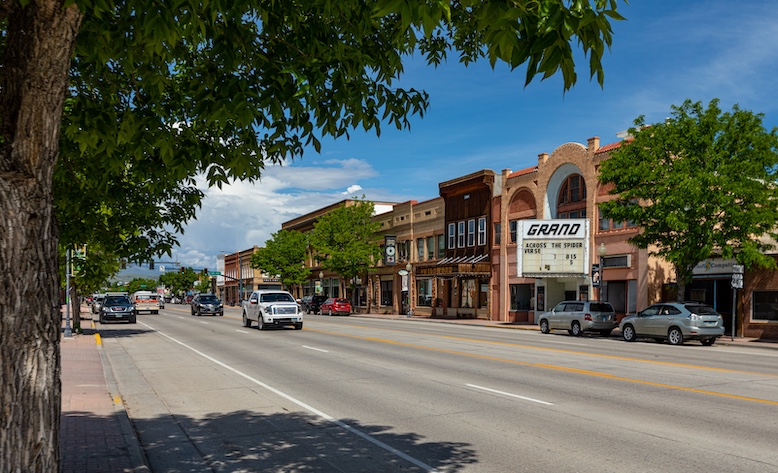
Lander is connected to several Old West characters, including the legendary outlaw Butch Cassidy, who lived and worked here as a cowboy. You can learn about Cassidy and many other early Lander residents at the Fremont County Pioneer Museum, which displays collections of artifacts ranging from pre-history through the 1920s. Photo by Heide Brandes
The smart way to see it all is to follow the towns over three or four unhurried days, flying into Cody and driving south through Wind River Canyon, where the highway threads between stacked walls of red and black rock.
Base first in Riverton, then move on to Lander, the outdoorsy heart of the region. The Lander Motel offers a clean, unfussy, charmingly retro night within walking distance of dinner and Pushroot Brewing Company, a small craft brewery made for a slow beer at the end of a long day.
Finish in Dubois, the wild and wonderful far end of the route, where the Longhorn Ranch Lodge makes a natural base for bighorn country and the trail rides leave from the door.
Eat the way the country eats. In Lander, order the trout at Cowfish, or the elk if it’s on the menu that day. In Dubois, the Cowboy Café serves an honest plate. Skip the salad, order a giant burger, and save room for one of the dozen-plus pies baked by hand. The pecan is worth every bite.
Getting here costs something in time and money, and a traveler is right to ask what the price buys. It buys a quiet that has gone nearly extinct everywhere else: wind across grass, the low complaint of a river, and land big enough to make a person feel small in the good way, the way these mountains and this sky always have.
No lines form and no crowds gather. Animals that came back from the edge of vanishing move across ground that remembers them. Yellowstone will still be there, glittering and packed, just up the road. Wind River Country asks only that a traveler slow down, stop the car, and look at the America that never had to be rebuilt, because it never went away.
Heide Brandes is a travel journalist based in Oklahoma City. Before leaving the East-West News Service website, please see her recent article on the State Fair of Texas and her earlier exploration of the Portuguese island of Madeira