

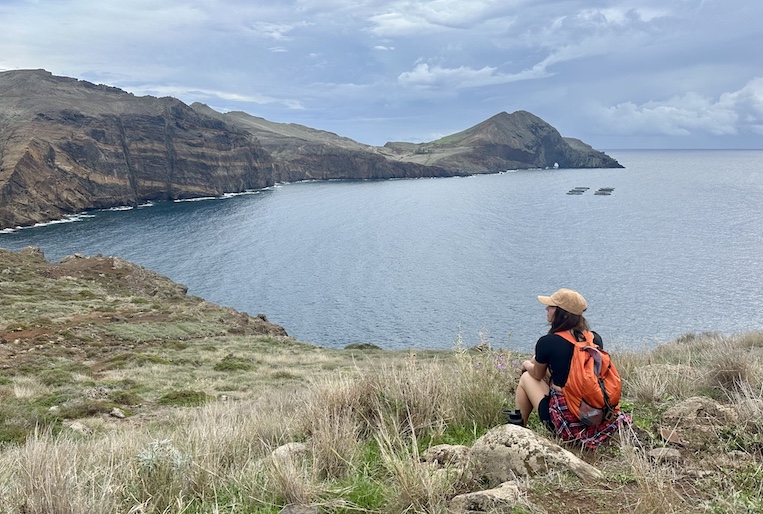
Madeira, a Portuguese island 600 miles off the coast of Morocco, has quietly become one of Europe’s fastest growing tourist destinations. Photo by Heide Brandes
By Heide Brandes
The clerk at the tiny convenience store on Rua de Santa Maria in Madeira’s capital city of Funchal sized up the two American women browsing for bottled water.
“Are you visiting? Have you had poncha yet?”
Something in his enthusiasm demanded that honesty be abandoned. Even if you have tried poncha already, it’s always best to look surprised and say ‘no.”
“It’s our local drink. Come, you must try this one,” he said, pouring light, orange-colored liquid into small glasses. “And this one. And this one here is my favorite.”
Eight shots later, stumbling down Funchal’s tilted sidewalks, the distinction between Madeira’s famous fortified wine and the sugar cane rum locals actually drink became abundantly clear. Poncha goes down like sunshine and hits like a freight train somewhere around shot five.
That clerk had just provided the first lesson about Madeira. The island everyone thinks they understand turns out to be something entirely different. While cruise passengers cluster around Monte Palace cable cars, this Portuguese island 600 miles off the coast of Morocco has been quietly rewriting European tourism without anyone noticing until the numbers became impossible to ignore.
More than 221,300 visitors descended on Madeira in April 2025 alone. Tourist revenue climbed 22.2%, hitting a record €756.7 million in 2024. New direct flights from Newark eliminated the lengthy European stopovers that previously deterred American tourists. European travelers from Germany, the UK, and Poland discovered what the Portuguese have known all along. This isn’t another Mediterranean island peddling beach resorts.
They call it “The Hawaii of Europe,” though locals bristle at the comparison. Both islands are volcanic, but Madeira trades palm-fringed beaches for medieval irrigation channels carved into mountainsides by prisoners, waterfalls plunging into fog-shrouded forests older than the Ice Age and views that require either climbing 1,862 meters above sea level or spending an hour in first gear on roads designed to test nerve rather than facilitate travel.
Where Water Carves Stone
Understanding Madeira means understanding the levadas, irrigation channels that have accidentally become the island’s greatest tourism asset. Local guide Celso Sousa has hiked every major levada on Madeira and made his reputation with drone photography, capturing these medieval waterways from high angles.
On a misty morning near Santana, Sousa leads the way along Levada da Agua d’Alto, a channel that official tourism maps don’t mention. Park along what feels like someone’s private street, walk past houses where locals watch with bemused tolerance, then follow the narrow stone channel through increasingly wild terrain.
“These are my favorite waterfalls,” Sousa says when the path narrows to barely shoulder width. “You can feel the soul of the forest here. It’s almost like they whisper to you.”
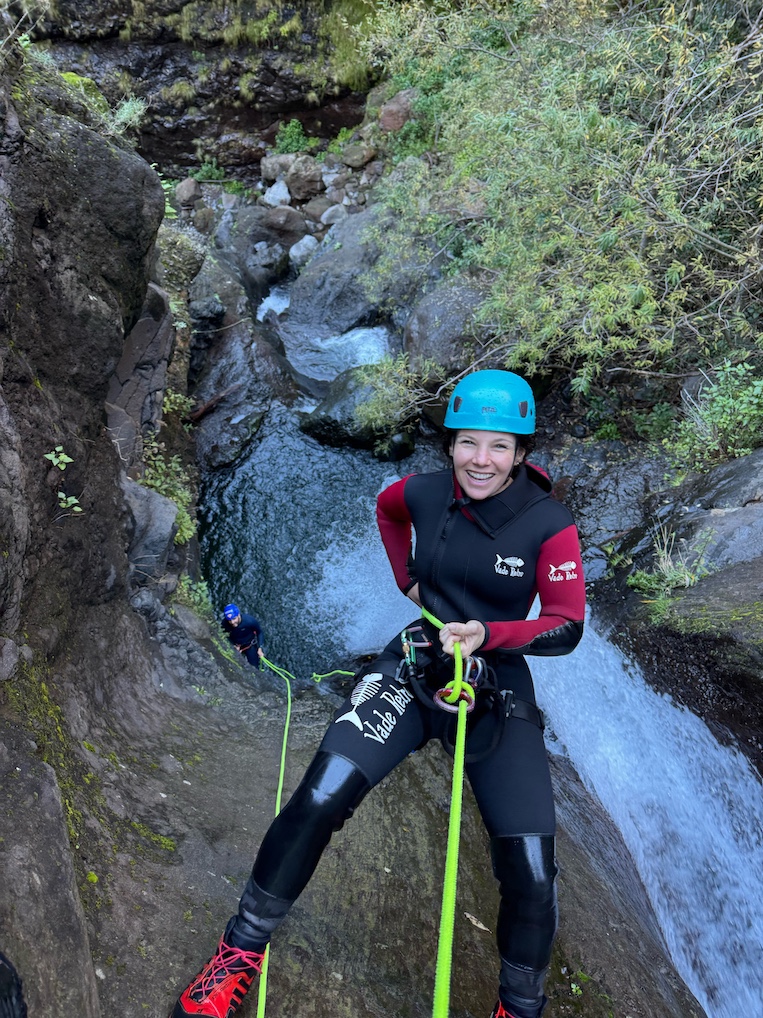
Canyoneering down one of Madeira’s many waterfalls is just one of the adrenaline-fueled adventures visitors can enjoy in addition to hiking and sightseeing. Photo by Heide Brandes
Around the next corner, Cascata Agua d’Alto drops 150 meters down a green canyon, water thundering into a pool surrounded by jungle so dense it could swallow evidence. When the sun breaks through the clouds, rainbows appear on the waterfall.
Levadas are stone aqueducts built starting in the 15th century to carry water from the rainy north to the drier south. Criminals and convicts from mainland Portugal did the brutal work, suspended on ropes, carving channels through solid basalt. Many died in the process. Today, more than 2,170 kilometers of levadas crisscross the island, their maintenance paths offering hiking that feels distinctly Portuguese.
The most famous walk leads to 25 Fontes in Rabaçal, where multiple streams cascade down cliff faces. The three-kilometer hike through dense vegetation delivers Madeira at its most photogenic, which explains why it’s also Madeira’s most crowded walkway.
Finding levadas to hike requires little more than a rental car and Earl Walz’s “Sunshine Coast Trail Guidebook,” though locals like Sousa know the unmapped channels that don’t appear in any guidebook. Unofficial routes like Levada da Agua d’Alto require either hiring a guide who knows the territory or possessing the confidence to follow stone channels into forests without any guarantee of maintained paths or safety railings. Trail maps are available at tourist offices in Funchal, though the most rewarding walks often begin where the maps end.
Walk enough levadas and the channels start to make sense in ways that transcend their engineering. Water seeks the path of least resistance. So do these stone aqueducts, following contours that only become apparent after hours of walking. Stand beside a levada on a quiet afternoon and listen.
Sousa was right. They do whisper.
Into the Fog Forest
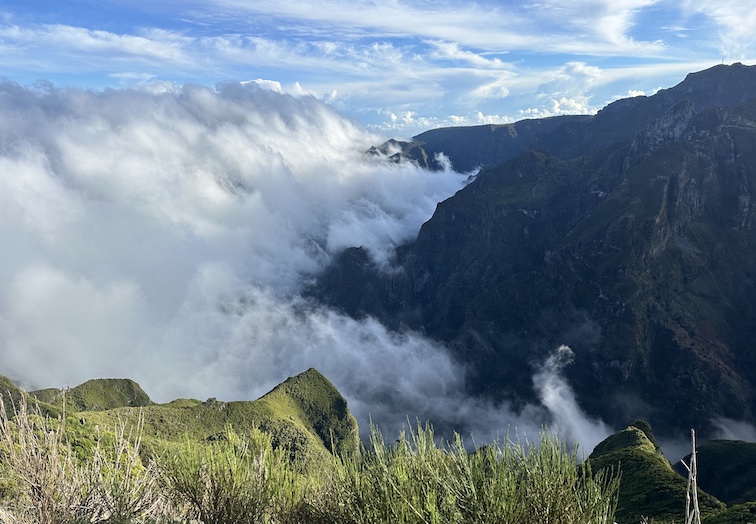
Madeira’s dramatic landscape lures hiking enthusiasts to its levada trails, mountaintop paths and through UNESCO-protected Laurissilva forests. Photo by Heide Brandes
The levadas lead into the Fanal Forest, a UNESCO-protected Laurissilva forest, one of Europe’s last remaining subtropical laurel forests from the Tertiary period. The trees survived while glaciers scoured the continent clean, creating an ecosystem that feels more Jurassic than European. Known for its ancient, gnarled trees and frequent, mystical fog, visitors can experience its enchantment by taking a walk or hike, such as the PR13 trail, or simply by exploring the area around the parking lot.
Deep in the forest stands what locals call the Fanal witch’s tree, a laurel so ancient and twisted it looks designed by someone who understood that mystery requires appropriate staging. Its gnarled branches reach in sinewy directions, creating a canopy that exists in permanent twilight.
Fog swirls around its trunk in patterns that make photographers return repeatedly, hoping to capture the moment when light and mist create something that looks like evidence of magic. Moss covers everything. The silence feels ancient in ways that make conversation seem like an intrusion. This is Madeira before Portuguese explorers arrived in 1419, before the first levadas, before tourism became an industry worth €756.7 million annually.
But Madeira’s wildest soul reveals itself not in walking ancient forests but in descending through them, water rushing past, while hanging from ropes anchored to rock faces that have been smoothing themselves with waterflow for millennia.
Canyoneering on Madeira is a popular activity that means rappelling down waterfalls, sliding off smooth cliff faces into pools below, and understanding that some places can only be experienced by trusting equipment and physics in equal measure. This isn’t hiking past waterfalls. This is moving through water as it carves stone, becoming part of the geological process rather than merely observing it.
The descent through Ribeiro Frio canyon takes hours, with guides managing ropes while participants slide down rock faces polished smooth by centuries of flowing water. Book with outfitters like Epic Madeira or Madeira Explorers who provide wetsuits, helmets, and harnesses, though bringing water shoes with good grip makes a difference on slick stone.
Basic swimming skills and reasonable fitness are required, but no previous canyoneering experience. Summer months offer warmer water, though the canyon runs year-round for those who don’t mind the Atlantic chill.
Above the Clouds
Madeira saves its most dramatic hiking for the mountains. The Vereda do Arieiro connects Pico do Arieiro at 1,818 meters to Pico Ruivo at 1,862 meters. The trail covers 15.6 kilometers out and back, taking seven to eight hours for those who don’t stop every five minutes to photograph views that look fake until standing above clouds makes it clear this is simply what happens at altitude on volcanic islands in the Atlantic.
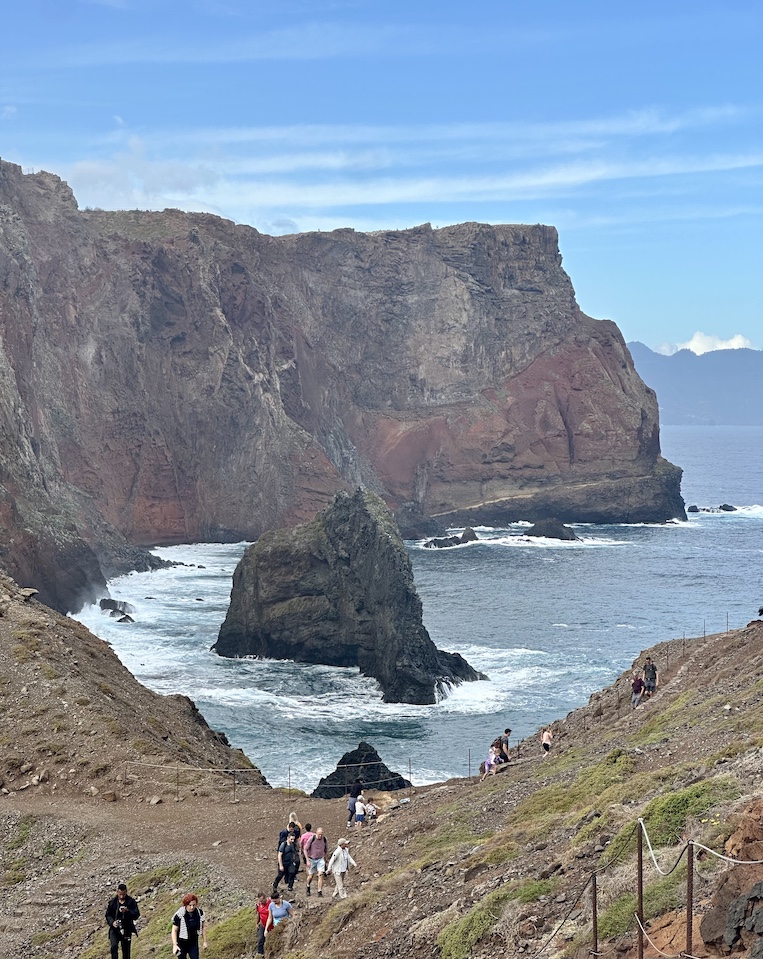
Hikers enjoy the views from Madeira’s Eastern Peninsula along one of the island’s hundreds of hiking trails. Photo by Heide Brandes
The trail attacks the mountain with stairs carved into rock faces, tunnels blasted through peaks and stretches where the path narrows to barely shoulder width with thousand-meter drops on both sides.
Stand on Pico Ruivo in the early morning and watch clouds pool in valleys below while peaks pierce through like islands in a white sea. The light hits volcanic rock at angles that seem designed by cinematographers.
Madeira’s eastern peninsula offers something completely different. The Vereda da Ponta de São Lourenço takes hikers along 7.5 kilometers of coastline that looks like a different island entirely.
Round the first corner and see red volcanic cliffs dropping into the turquoise ocean, dried magma visible in cracks like geological evidence of the island’s violent birth. The terrain here is drier and more desolate than the rest of Madeira, creating a stark contrast. Walking this peninsula feels like exploring another planet that happens to have really good ocean views.
An Hour in First Gear
Getting to these hikes requires either nerves of steel or complete ignorance about what mountain driving involves. Possibly both.
Madeira’s geography created microclimates that make weather forecasts meaningless. The mountainous north stays cold and rainy. The south basks in sunshine. Drive from one side to the other and pass through three seasons in 30 minutes.
Rent a car and they hand over keys to a stick shift. This matters because Madeira’s mountain roads are actively hostile to flat surfaces. Drive from Funchal to Santana and spend close to an hour in first gear, grinding up switchbacks designed by someone who thought guardrails represented an unacceptable compromise. Roads are narrow. Drops are steep.
But those drives deliver access to places that justify every nervous moment. Coastal roads wind past terraced fields where farmers grow bananas on slopes that defy physics, where stone villages cling to mountainsides and where views from hidden pull-outs seem to go on for miles.
What Locals Actually Drink
Everyone knows Madeira wine, the fortified wine that celebrated American independence in 1776 and charmed Winston Churchill. The wine ages in wooden casks, developing caramelized sugar flavors that improve over decades.
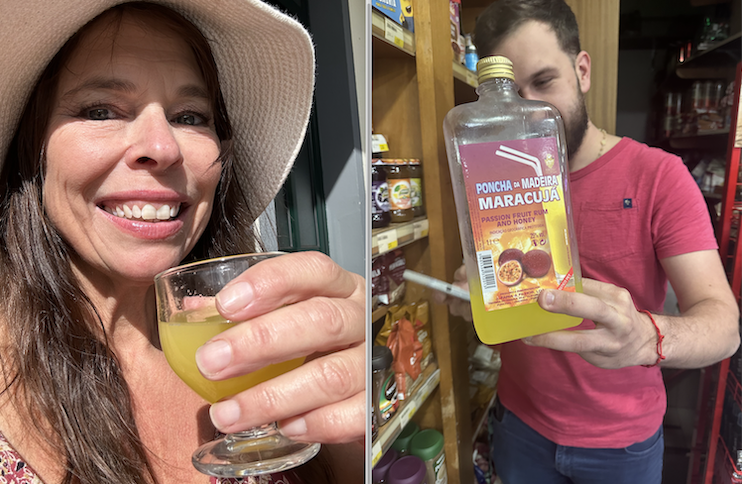
Left, The author samples the local drink, Poncha, a rum-based concoction with sugar and lemon that goes down smooth and hits hard. Photo by Emily Brashie Right, Madeira residents are more than eager to share a sample of Poncha with visitors to the island. Photo by Heide Brandes
But locals don’t drink Madeira wine at neighborhood bars. They drink poncha, that honey-sweetened sugar cane rum mixed with lemon juice. The drink gets stirred with a wooden stick called a caralhinho, which translates to something that would make grandmothers blush. Poncha goes down smooth and hits hard.
The punch isn’t the only thing exploding with color and flavor. The island’s Mercado dos Lavradores, or city market, is alive with color. Vendors sell exotic fruits most Americans can’t identify, flowers in shades that seem computer-generated, and fresh fish caught that morning. They didn’t build it for visitors, though. Tourists simply discovered something that already existed.
This organic discovery explains Madeira’s recent tourism explosion better than any marketing campaign. Travel bloggers found those levada trails and mountain hikes, then posted photos that made followers question why they’d been wasting time in Barcelona and Rome. The post-pandemic travel shift toward nature and outdoor adventures favored destinations like Madeira over urban breaks and beach resorts.
The island’s tourism officials managed growth carefully, avoiding overtourism problems plaguing Venice and Barcelona. They focused on infrastructure improvements like levada trail maintenance and safety measures. They promoted sustainable tourism that emphasized conservation and cultural preservation. They recognized that Madeira’s appeal came from being Madeira rather than trying to become something else.
The result is an island that still feels like a discovery even as visitor numbers climb. Here, visitors can hike to waterfalls like Cascata Agua d’Alto without encountering tour groups, tackle the mountain trail from Pico do Arieiro to Pico Ruivo and still find stretches alone with clouds or walk the red volcanic cliffs of Ponta de São Lourenço without needing to dodge selfie sticks.
But that window is closing. Those April 2025 visitor numbers represent an 11.8% increase over the previous year. The Newark direct flights will bring more Americans who’ve finally figured out this island exists. The German, British, and Polish markets continue growing. Tour groups are discovering those “hidden” levada walks.
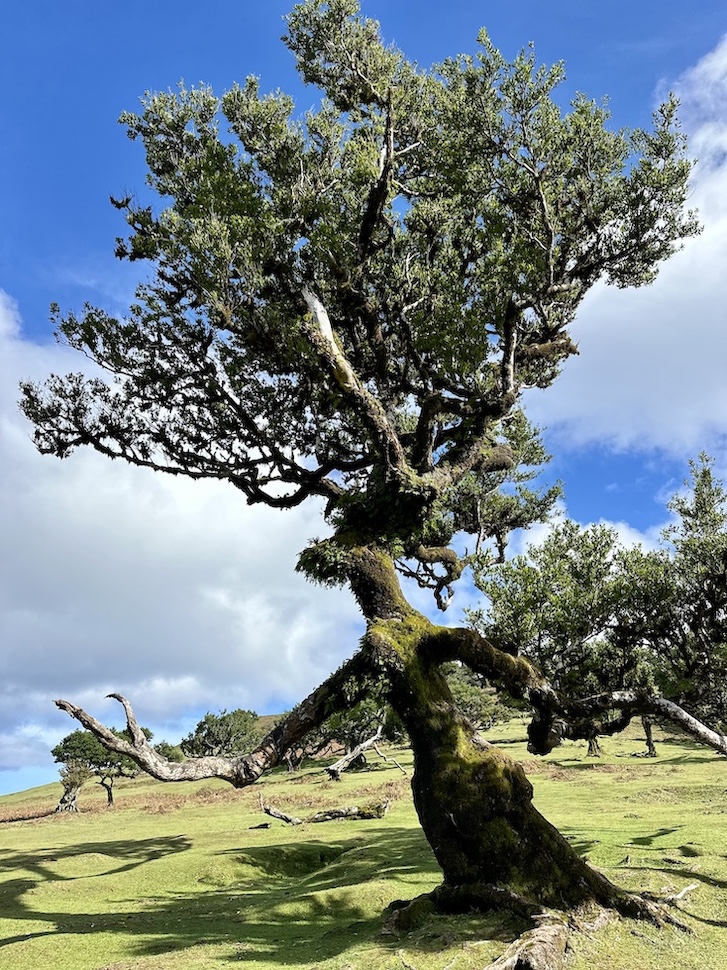
Fanal Forest, a UNESCO-protected Laurissilva forest home to the famed “Witch’s tree,” is one of Europe’s last remaining subtropical laurel forests from the Tertiary period. Photo by Heide Brandes
The comparison to Hawaii feels like an insult because Madeira doesn’t need to be like anywhere else. Its best experiences still require either serious hiking, nerve-testing driving, descent through water-carved stone, or a willingness to accept eight shots of poncha from enthusiastic convenience store clerks who just want to share something they love with strangers who wandered in looking for water.
That clerk was right about one thing. Once you’ve tasted real poncha, once you’ve stood above clouds on Pico Ruivo, once you’ve followed Celso Sousa to waterfalls that whisper, once you’ve slid down smooth rock faces into clear pools, once you’ve walked through fog that makes the present feel temporary and the ancient feel permanent, Madeira becomes the standard by which other islands get measured.
And most of them come up short.
Heide Brandes is a travel writer and journalist based in Oklahoma City. Her work has appeared in BBC Travel, National Geographic, Smithsonian and AFAR. Her website is www.heidebrandes.com. This is her first story for the East-West News Service.