

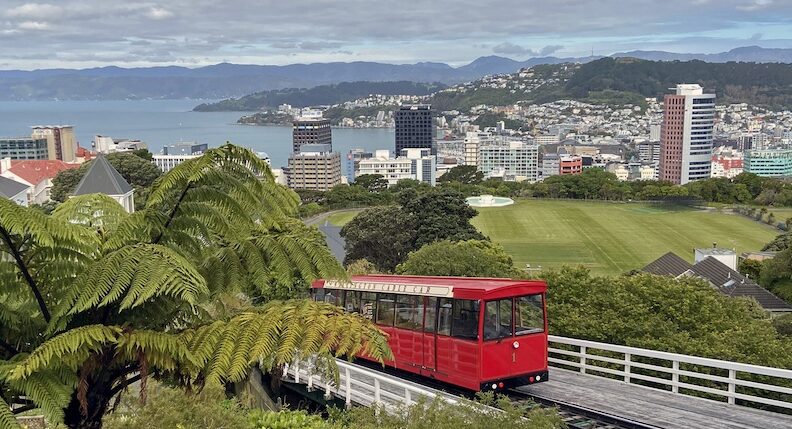
There are places that hit you, like really hard at first glance, and then there are places that linger in your mind slowly, and then you realize, oh wait, this is actually extraordinary. New Zealand did both. I showed up thinking I’d mostly remember the scenery, spectacular and dramatic. But the images that stayed was those weird little moments, where nature, history, and culture seemed to bump into each other in the most unplanned ways. Looking back, the experience felt like the perfect inspiration for an article for a travel magazine, capturing not just the breathtaking landscapes but also the quiet, unexpected moments that make New Zealand unforgettable.
Where Adventure Meets the Mountains
I was standing on the edge of a platform in Queenstown, and honestly, I couldn’t get it , why would anyone jump into empty space just like that? Still, one after another people did exactly that. Queenstown, near the bottom of New Zealand’s South Island, is the birthplace of commercial bungee jumping and has this talent for nudging visitors into testing their nerves. It’s tucked around Lake Wakatipu, all glassy calm, with the jagged tops of The Remarkables Mountain Range in the background. The town is basically a buzz—skiers, skydivers, paragliders, and people who look like they slept in harnesses. I decided I’d keep both feet on the ground though, and somehow the views were still wild enough to make my heart thump anyway.
That contrast sort of sums up New Zealand. It’s a small country, but somehow every landscape is trying to be bigger-than-life on purpose, like it’s showing off. When I drove through the South Island, snow-coated mountains rose sharply above green valleys where the sheep grazed as if none of it was urgent, like the whole world had all the time. Then Fiordland arrived, and wow, the mood changed completely. There were deep fjords cutting through towering cliffs, and I stood there in front of Milford Sound, thinking ok… this is exactly why Rudyard Kipling called it the “Eighth Wonder of the World.” Photos don’t really manage; they never fully capture the scale right, not even close, honestly.
Where the Earth Never Stops Moving
The North Island had a totally different spectacle. Rotorua felt like the ground was breathing under me. Steam seeps through the cracks in the soil, pools of mud bubble in this perpetual cycle, and the air holds on tightly to that pungent odor of sulfur. Even Kuirau Park, which is just a few minutes away from downtown Rotorua, offers no other reasonable path except those fenced walkways to tour this restless and slightly impatient terrain.
During one of my visits to the mineral-heated pools, I had an interesting conversation with a local man called Charlie. Looking at the clouds of steam rising around us, he laughed out loud and told me that the pungent odor we were experiencing wasn’t pollution at all; it was just “Mother Earth farting.” It’s a funny comment to make about what seemed like such a serious topic before.
Even closer to my location, the forceful energy was displayed in Te Puia in a much more powerful manner. I had the chance of seeing the Pōhutu Geyser erupting in a massive plume of boiling water high into the air. However, it was not only the geyser that stood out. Being in the New Zealand Māori Arts and Crafts Institute gave me the sense of being inside an actual workshop where skilled craftsmen taught me their techniques in carving and weaving. Listening to the stories of Aotearoa, which means the “land of the long white cloud” in the Maori language, was a lot different from those of the usual European discovery stories.
A Coastline Built by Many Hands
When I sailed along the east coast, I could feel how immigration shaped New Zealand in unexpected ways. The streets of Napier were very polished, elegant, and almost unreal, with a strong feeling of reconstruction after a terrible earthquake behind all of that, making one feel that the town has its wounds but also a style. Akaroa was truly French, with tricolor flags waving, French street names all around, and lots of bakeries giving off a smell of warm, buttery dough. Dunedin, however, owed much of its identity to Scotland—from architecture to sculptures to typical pub menus.
However, there was another side of the story discovered during the journey, as introduced predators such as rats, stoats and cats came and almost exterminated some native species, leaving the country to change its approach to wildlife protection. In Wellington, at Zealandia, I visited a predator-proof park housing many endangered birds like kiwi, kaka and saddlebacks as well as an ancient tuatara—a reptile whose relatives lived about the time when the dinosaurs existed.
Wildlife That Makes You Wait Then Smile
This obsession appeared once more on Motuara Island at the northern tip of the South Island, where I received assistance from naturalists to locate weka, fantails, and the raucous kākā while at the same time learning about conservation efforts that aim to save the highly endangered kākāpō. While in Fiordland, seeing the rare Fiordland crested penguin was considered a prize for just stopping, observing for some time, and listening to what the land had to say first.
New Zealand is associated with Hobbiton and the grand landscapes depicted in The Lord of the Rings, and of course, it’s easy to see why. But what truly stayed with me wasn’t only the scenery. It was the feeling of being in places where geology, wildlife and culture are constantly shaping each other, as if they’re in a quiet conversation all the time. For a country that looks so small on the map, New Zealand somehow leaves a surprisingly huge impression—exactly the story that should belong in thoughtful travel news articles, not just on your camera’s memory disk.
For a deeper exploration of this journey, read the full article: