

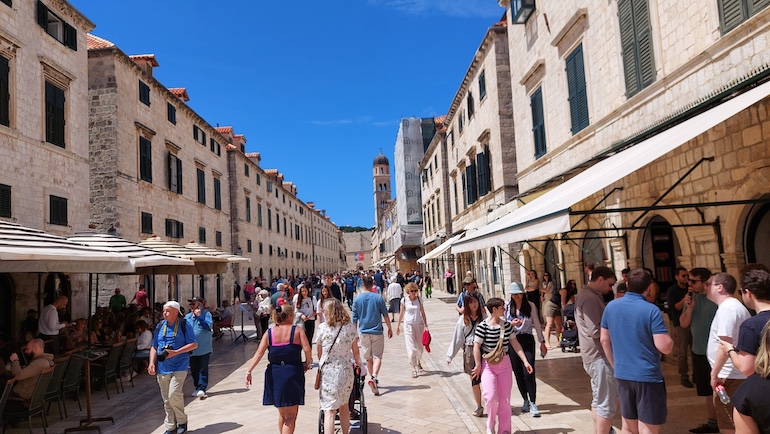
Lined with shops, Stradun is Old Town Dubrovnik’s main street and during peak tourism days is usually overcrowded with day-trippers and cruise ship passengers. Photo by Richard Varr
By Richard Varr
Old Town Dubrovnik was a completely different place to live just 20 or 30 years ago.
“When I was a kid there were no restaurants here – not even one,” says Lidija Miljas as we walk along a medieval street – more like an alleyway – in a busy area where Miljas grew up in the now tourist-packed walled city. “It was easy for us to move around and play.” Within the last couple of decades, she says, restaurants teeming with their outdoor tables and chairs have cramped the narrow side streets and squares of Croatia’s most famous destination.
Miljas, a city tour guide, leads me not to the main tourist sites but instead to some of the city’s hidden corners from her youth – a few places that still look untouched by Dubrovnik’s rampant overtourism. We pass by her childhood home atop an ascending street with dangling flowerpots where her aunt still lives. Many adjacent homes are now tourist rentals.
We stop at an original stone doorway of a 15th-century orphanage. Latin graffiti from 1597 chiseled into the wall of an old church reveals how a priest admonished children for playing ball against the church walls.
“This is where we played ball, same as my father and grandfather, a long tradition. We were not allowed to make excessive noise in these streets usually from two to five in the afternoon,” she recalls. “If you disobeyed, you could get a bucket of water spilled on your head from one of these windows.”
Reaching critical levels
Europe leads the world in overtouristed destinations. Old Town Dubrovnik consistently ranks among the worst in recent years, with a 27:1 tourist-to-local-resident ratio during peak times. Others high on the list include Amsterdam, Venice, Paris, Barcelona, Rome, Mallorca, Malta and some of the Greek islands, all struggling with a deluge of sightseers and day-trippers.
Reasons include lower-cost airlines and cruise vacations, a surge in affordable rental properties on Airbnb and Vrbo, and the rise of “revenge travel” after the pandemic. Successful marketing measures have quickly outpaced existing tourism infrastructure, leaving planners far behind in managing crowds.
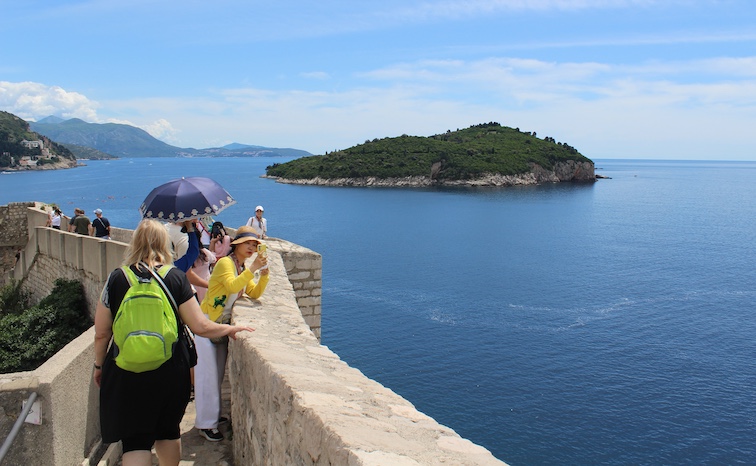
Walking the City Walls in Old Town Dubrovnik requires a timed ticket that helps limit crowds on the narrow walkways. Photo by Richard Varr
Locals often fall victim to the consequences. Rents soar, with many forced out of central sightseeing districts; ecosystems erode; and pollution harms cultural sites. Some frustrated residents have taken legal action. Destinations are fighting back with measures such as cruise ship taxes, entry fees for day-trippers, limiting hotel growth, and caps on property rentals.
This story will cover several overtouristed spots that I have visited within the last two years.
Dodging Dubrovnik pedestrians
Mid-afternoon tourists deluge Old Town’s main street called Stradun, lined with bars, cafes, and seemingly no shortage of souvenir and trinket shops. Yet I found walking along some of the smaller streets and alleyways more congested, especially when groups of friends or families clogged ice cream stands and entrances to shops and restaurants, often breaking the pedestrian flow.
To take a break from the crowds, I stepped into a few of the city’s prominent historic attractions: St. Blasius, an 18th-century Baroque church modeled after one in Venice and the Rector’s Palace, the old seat of government, now a museum, that’s fronted by rounded arches and columns topped with elaborate capital carvings.
“Locals, as you can imagine, are very frustrated,” opines Miljas. “The biggest problem is the number of cruise ships that visit us in a day. In the 70s and 80s, about 6,000 people used to live within the walls, a good balance between locals and visitors,” she recalls, saying that the number is now down to 600. “The Old Town lost a great deal of its soul because so many locals moved out, using their homes for tourists.”
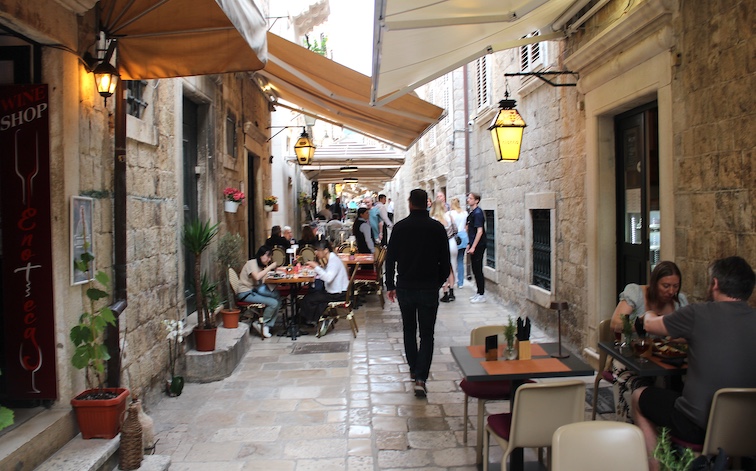
Narrow medieval streets in Old Town Dubrovnik are now lined with restaurants that have opened in recent years. Photo by Richard Varr
Nonetheless, the Dubrovnik Tourist Board reports the city has taken several steps towards easing overcrowding and improving sustainable tourism. They include the city working with the Cruise Lines International Association (CLIA) and the Port Authority of Dubrovnik to improve cruise ship scheduling and limit daily passenger entry to around 4,000, implementing traffic control measures that prioritize residents and reduce vehicle congestion.
Visitor monitoring systems and people counters in the Old Town help forecast congestion and plan the distribution of daily visitors, while walking the City Walls and entry to other sites require timed tickets to reduce overcrowding during peak hours.
A digital pass program encourages visits to cultural sites outside the busiest zones. In fact, I escaped the crowds by taking the short ferry ride to pine-forested Lokrum Island, where I walked historic gardens and along boulder-strewn beaches, and explored a 12th-century Benedictine Monastery later reconstructed in Neo-Gothic style.
“The measures are showing concrete results,” says Tourist Board Director Miroslav Drašković. “Research conducted in cooperation with the University of Dubrovnik confirmed significantly lower pressure on the historic core compared with previous years, despite overall tourism growth.”
“We believe Dubrovnik can serve as an example of how historic destinations can successfully transition from managing mass tourism toward a smarter and more sustainable tourism model.”
Amsterdam: curbing cruise traffic and rowdy Red Light District crowds
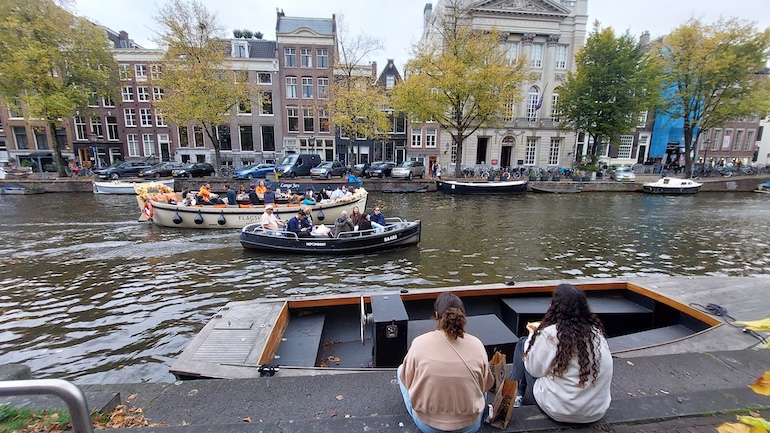
Taking a canal tour or party boat is a nice way of avoiding crowds when tour groups and day-trippers crowd Amsterdam’s narrow streets, peaking in the late morning and afternoon. Photo by Richard Varr
Crammed with fast food restaurants and souvenir shops, Damrak ranks as one of the Dutch capital’s most tourist-congested thoroughfares with a steady stream of often young and boisterous day-trippers from the train station to central Dam Square. Many continue onto Kalverstraat, a jammed pedestrian shopping street sometimes as thick as the crowds on New York’s Fifth Avenue. Partying tourists invade the Red Light District, many wielding boorish and drunken behavior especially at night.
The city of 940,000 topped 23 million overnight stays last year. Yet one of the most obvious signs of overtourism is when trying to book a visit to the Anne Frank Huis Museum or the Van Gogh Museum, which must be done weeks in advance, the former at six weeks.
Exploring the small rooms where Anne Frank wrote her famous diary involves walking in a consistently moving line of visitors crowding the narrow halls and cramped stairwells of the canal home, their silence a palpable indication of the intense fear the teenager and her family endured while hiding out from Nazi occupiers.
“For years, the real friction came from the big tour operators packing 30 to 40 people behind a single guide and sending group after group through the same narrow streets,” recalls Amsterdam private tour guide Mark Law with ThatDamGuide.com. “The city’s response was capping group sizes at 15 as well as banning guided groups entirely from the area around the Red Light District. Smaller groups are better guided, better behaved and don’t bring streets to a standstill.”
“Years ago, I left the large group tour company I worked for and set up my own, reducing my group size first to 10 and then to 8,” adds Law, who now leads small groups of 2 to 4 people.
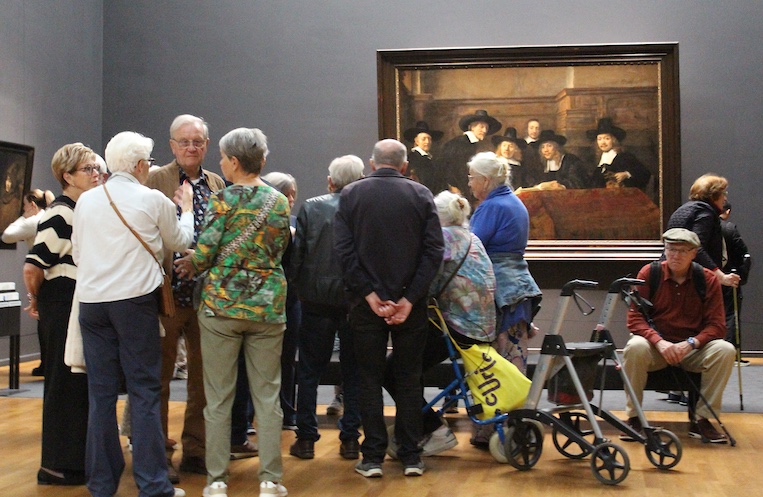
Visitors crowd along the Dutch masterpieces in Amsterdam’s Rijksmuseum. Photo by Richard Varr
Amsterdam & Partners, the city’s official destination management organization (DMO), notes the City of Amsterdam is taking a more sustainable approach for managing tourism. Key strategies include ceasing further growth in overnight room capacity by nixing new hotel development, although existing hotels can refurbish their properties as long as the total number of rooms does not increase. They’re also requiring permits and limiting the number of rental nights for B&Bs and home rentals.
More costly measures for visitors include charging a 12.5 percent tourist tax on overnight stays and a €15 tourist tax for cruise passengers. Other restrictions include reducing river cruises and the number of cruise ships, with a maximum of 100 sea cruise calls starting in 2026, and better control of noise from bachelor parties, pub crawls, and other potentially rowdy events. Stricter rules for smoking cannabis and guided tours are now in place.
“Overtourism is not just a numbers problem; it’s about balance,” says an amsterdam&partners spokesperson, using the company’s internet spelling. “That means investing in spreading visitors across neighborhoods, supporting local businesses and culture, and making sure tourism revenues benefit the broader community.”
Venice and Florence: Italy’s overcrowded gems
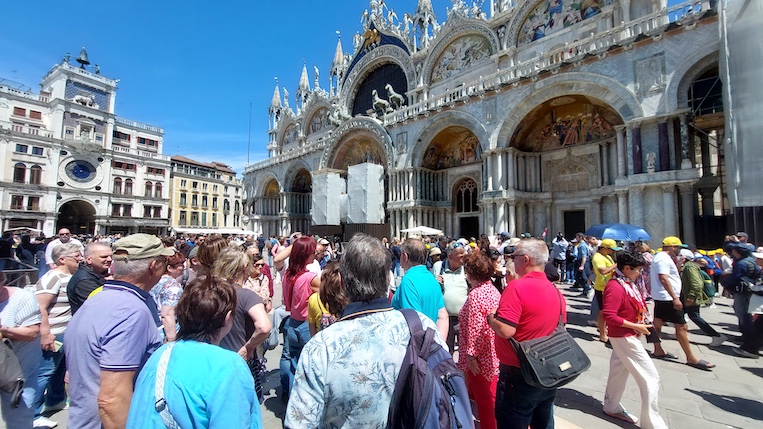
Afternoon crowds in Venice outside St. Mark’s Basilica, typical of the daily tourist crush in St. Mark’s Square. Photo by Richard Varr
St. Mark’s Square is one of Italy’s most congested landmarks. Tour groups parade through Venice’s wide-open piazza where the Doge’s Palace and St. Mark’s Basilica strictly enforce timed-ticket entry. Sightseers vie for space on an arching footbridge along the Riva degli Schiavoni to peer at the palace’s notorious Bridge of Sighs. They swarm atop the Grand Canal’s Rialto Bridge and pack shops selling leather purses and belts, Murano Glass and souvenir trinkets.
According to the city’s official visitors guide, VisitVenezia.eu, tourists numbered up to 80,000 a day after the pandemic. Before the lockdown, annual visitors numbered 23-25 million, but by early 2020 that number had plunged by 90 percent, forcing many small businesses to close. Vibrant St. Mark’s Square was virtually empty. So-called “revenge travel” after the pandemic, however, boosted overnight stays to 38.8 million in 2024, according to one source.
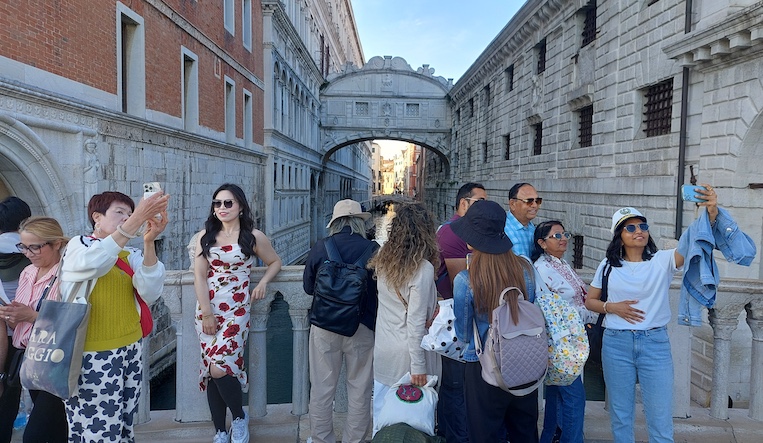
Excited tourists crowd a footbridge for Venice’s iconic view of the Doge’s Palace’s “Bridge of Sighs.” One of the city’s most photographed locations, the passageway over the canal has a macabre history as the last view of freedom before prisoners reached the palace’s dungeon. Photo by Richard Varr
Since then, measures to control the surges have included requiring day-trippers to register and pay daily fees of up to €10 (recent proposals have raised them to €50) on certain peak days, mostly during spring and summer weekends. The measure exempts overnight visitors, children and locals.
Tour guides no longer shout through megaphones or loudspeakers to groups now limited to 25 people, key to controlling noise pollution. Cruise ships have been banned from entering the Venetian Lagoon since 2021 and now berth along the mainland with passengers bussed or shuttled to the historic center.
In Florence, meanwhile, I stood in a long wrap-around line to visit the city’s centerpiece Duomo with its dazzling Neo-Gothic façade of tri-color marble panels. You need a timed ticket to enter the Galleria dell’Accademia to see Michelangelo’s David statue. But once inside, it can be an exhausting experience in itself, including a security check and seemingly unrelenting crowds at each artwork until closing.
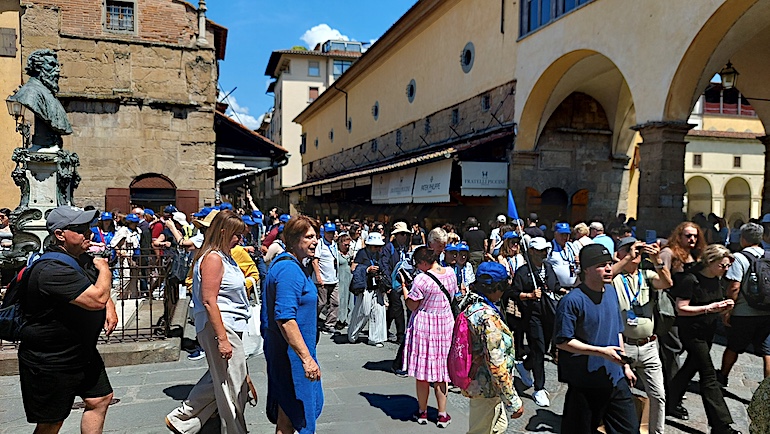
Heavy tourist traffic on Florence’s Ponte Vecchio peaks in the afternoon and early evening as visitors fill the bridge’s jewelry and watch shops, while others just stroll across for views of the Arno River. Photo by Richard Varr
Florence is taking what’s been called an unprecedented step to curb overtourism. As reported in The Florentine, a recently approved measure expands the area beyond the city center where no new Airbnb-type rooms can open. The ban restricts new such rentals on more than 103,000 residential properties, nearly tripling the number banned by a previous measure. Existing short-term rentals are not affected for now.
Last year, the city put in place a 10-point-plan. In addition to prohibiting new short-term rental properties, the measure bans lockboxes that hold room keys for existing properties, requiring property owners to meet their overnight guests in person. It also restricts tour guides from using loudspeakers or megaphones. Golf carts, rickshaws and other such transportation means are no longer allowed on the city’s narrow streets.
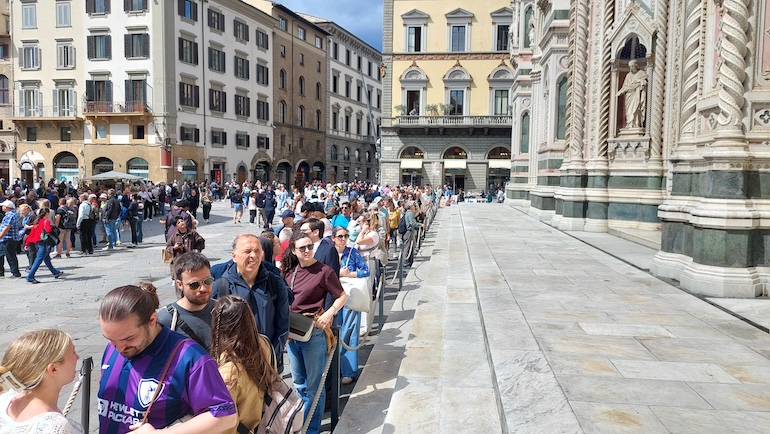
A long line of tourists waiting to enter Florence’s Duomo. On this day, the wait was under an hour. Photo by Richard Varr
Pedestrian districts increasing in Istanbul
You could walk the 61 indoor streets of Istanbul’s Grand Bazaar for a few days or more and never quite see all of the 4,000 shops within one of the world’s largest and most historic markets. Add to that the congestion of up to 400,000 daily visitors (more on weekends and during holiday seasons) cramming aisles lined with hanging carpets, leather goods, glazed tiles, jewelry, lamps, boxes of Turkish Delights sweets, and almost anything else you might imagine.
Other overtouristed hotspots include the Hagia Sophia Grand Mosque where visitors usually wait for up to an hour (shorter for online tickets) which includes a security check line; the Blue Mosque often flooded with tour groups; and the Basilica Cistern with waits of up to an hour or more. Pedestrians even compete for space with fishermen along the edges of the famous Galata Bridge artery over the Golden Horn estuary.
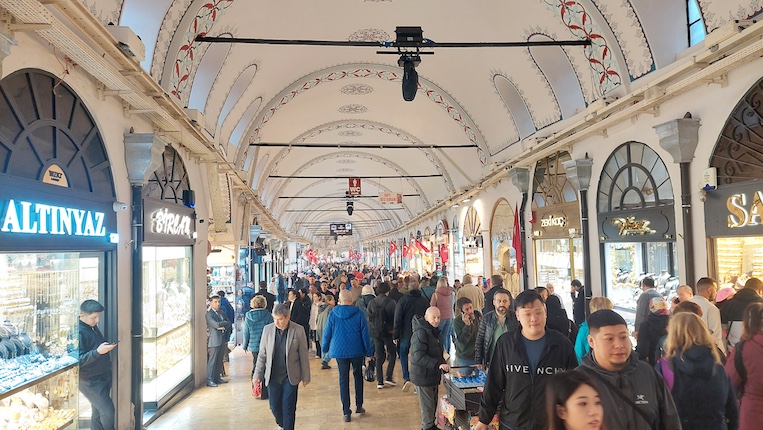
Shoppers walking along just one of the covered streets in Istanbul’s Grand Bazaar with more than 4,000 shops. Photo by Richard Varr
The Türkiye Ministry of Culture and Tourism reported Istanbul welcomed 19 million foreign visitors in 2025, with 64 million visiting the country, the latter figure up 2.7 percent over the year before. To help ease congestion, the city is limiting car traffic and expanding pedestrian zones along the Historical Peninsula and Old City, linking hotels and key tourist sites with designated shuttles, creating short-term drop-off areas for tour buses, and opening alternative and lesser-known archeological sites to more evenly disperse sightseers.
Yes, you can avoid crowds and find quiet moments
Traveling in peak season doesn’t mean you’ll encounter crowds at every turn. In Dubrovnik, I awoke at 7 am to catch a ferry to Korčula, one of Croatia’s most visited islands, and witnessed something I thought impossible just the day before: not a person on a main thoroughfare.
One evening in Venice, I walked through St. Mark’s Square just after 9 p.m. as the soothing sounds of bowing violins enveloped a surprisingly small number of tourists. Restaurants, bars, and souvenir shops remain open along mostly empty side streets where window shopping is easy. Golden mosaics sparkle on the facades of St. Mark’s Basilica, illuminated by dim lamplights.
Shoulder seasons are always kinder to the visitor in any major city, notes Law, and Amsterdam is no exception. “But there’s another trick that serves you just as well. Whatever time of year you come, start early. I now prefer to begin my three- or four-hour history walks at nine in the morning. We get the city largely to ourselves for the first hour or two, when the light and reflections on the canals are beautiful,” he adds. “The cafés and shops are just waking up.”
“When the streets do get busy in the afternoons, that’s a great time to get on a canal boat and enjoy a 90-minute tour, sitting back and watching the city go by.”
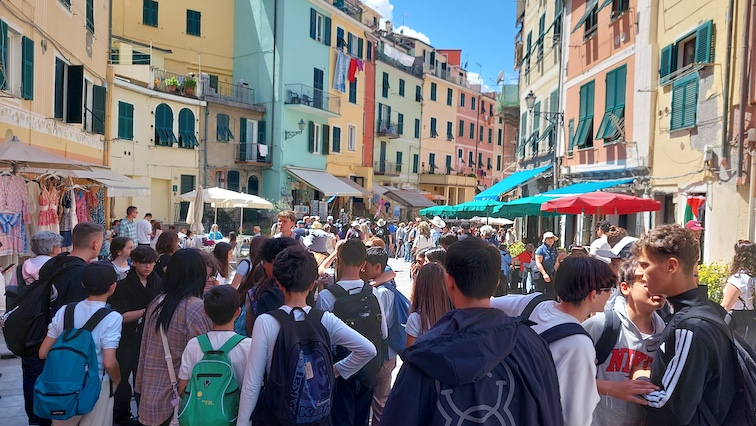
A tour group of students who have just arrived by train in central Vernazza, noted as the most popular and scenic town of Italy’s Cinque Terre (Five Lands), one of Italy’s most popular destinations. Photo by Richard Varr
An estimated 2.5 million visitors annually flood Italy’s popular Cinque Terre. The ocean-side walkways in Monterosso al Mare, one of the destination’s five colorful towns, are delightful to stroll after the tour groups and cruise ships have departed, particularly at sunset. Crowds are fewer in the spring and fall and drastically diminish in the off-season due to icy weather, shorter days, and businesses closing, which many locals relish.
“You can say the town is mine from a mental point of view, so you can completely recharge,” says Gabriele Marcellini, owner of the Hotel Stella della Marina within Monterosso’s historic center. “In the winter, it’s very quiet and relaxing because there are only 900 people here.”
“I can enjoy my town again for three months.”
Richard Varr is a former newspaper and television reporter who lives in Houston, Texas. His previous stories for EWNS examined the Dalmatian islands of Hvar and Korčula, coffee brewing in Bogota and Spain’s old Roman town of Mérida.