

I came hoping that it would be a typical ceremony that was organized and predictable. Instead, I was quietly overpowered. It was one of those experiences that do not appear to be much at the time but which linger a long time after you have gone.
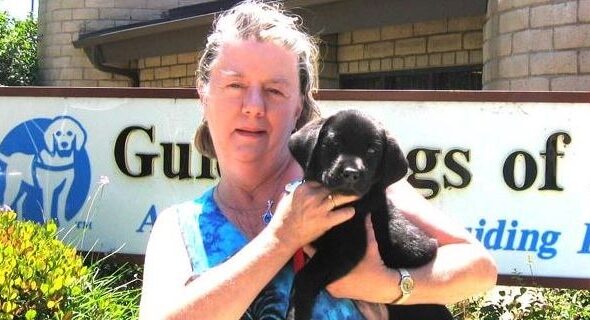
On a sunny morning in Los Angeles, a graduation for Guide Dogs of America was held at a guide dog training campus in Los Angeles’ San Fernando Valley. The place was less a canine institution but a community for people and their pets.
When Partnership is More Than That
Everything seemed to come to a standstill when Lorita Betraun rose to speak, with her cane in her hand and a black Labrador named Valor sitting at her elbow. “Valor and I have grown very close over the past few weeks,” she said, her voice cracking with emotion. “He is my sight, my light, my friend. Truly, Valor is my key to the city.”
When Betraun finished her remarks, the man sitting next to her rose slowly and recounted his raising the dog as a puppy. “Valor came to our family as a little fur ball but now, he’s grown up and has a real companion in Lorita,” he said, wiping a tear from his eye. “People ask me how I could ever give him up. But I think about the great mission to which he is called and say how could I not.”
A Community Attentive to dogs and people
My time in that place led me to recognize details that I had previously missed. Volunteers working throughout the site helped visitors while managing the ongoing training of young dogs. To make the puppies adapt to crowds and noise, volunteer families become “foster parents” to young Labradors, Golden Retrievers, German Shepherds and Poodle mixes to accustom them to crowds.
Making Hard work appear to be easy.
What I did not know prior to my attendance was the extent of preparation these dogs receive. They have much more intensive and extended training than the new owners they will serve. They not only are taught obedience but also judgment, to disregard distractions, to operate in complex environments, and even to disobey unsafe orders.
Not all dogs graduate to become guide dogs. Some are too easily distracted or too curious. They do not go out of the system even then. Others proceed to work in search and rescue or detection. It occurred to me that nothing here is thrown away—all directions are fruitful.
Stories That Stick.
I spoke to J.C. Clark, who previously worked as a police officer before he lost his sight in 1992 and went to Guiding Eyes for the Blind to get a guide dog. “There were 12 people in the class and we spent 26 days at the school, working 16 hours a day going through every possible situation that we might encounter in life,” he said.
He explained that his guide dog, Gilroy, helped him become independent because it enabled him to navigate unfamiliar airports and find parked vehicles. “There’s no way to put in words what a guide dog can do for a person without sight,” Clark added.
Visually impaired people can petition for a dog and, if approved, be flown to a school free of charge where they receive complimentary room and board while being matched with a dog of appropriate size and temperament.
Learning to Appreciate Guide Dogs
Guide dogs are bred to lead the blind. They must be strong enough to work in harness, yet small enough to fit beneath an airplane seat. Great Danes and terriers are disqualified by their size. Beagles are temperamentally unsuited to the task. Spaniels require excessive maintenance and are prone to eye problems. The following breeds, however, are suited to the task.
Labrador: Multiple varieties within the breed allow Labs to be bred to meet the specific needs of individual users. Labs retain their training and temperament if owners change.
Golden Retriever: Mid-sized dog with intelligence and loyalty. Retains its focus on work amid the distractions of urban life.
German Shepherd: Classic military work dog was first to be used for guiding the blind. Susceptibility to hip dysplasia is the breed’s only weakness.
Poodle: People with allergies appreciate a work dog that doesn’t shed. Downside: poodles require regular grooming.
There are more than a dozen guide dog schools across America. According to an American Culture Dispatch, most of them have public tours and graduations throughout the year. And judging by the recent scene at Guide Dogs of America’s seven-acre campus and kennel complex in north Los Angeles the ceremonies are a portrait of Norman Rockwell America where Girl Scouts still lead the Pledge of Allegiance, busloads of senior citizens are welcomed for the day.
For a deeper exploration of this journey, read the full Travel news articles: