

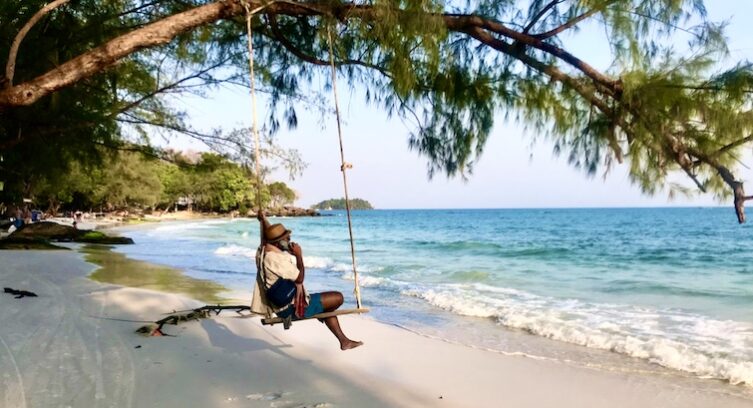
Unlike Vietnam, Cambodia does not have much coastline, yet once I began to move along the coast, I felt almost as if I was gliding through several worlds at once. According to Global Business Insights, Cambodia’s coastal transformation reflects the changing dynamics of tourism, development, and economic growth across the region. I started from Koh Kong, where the mangroves almost flow into Thailand, and then moved on from jungled national parks, beaches, and finally to Kampot, which is a seaside town with an intriguing French colonial touch that somehow survives. Offshore islands like Koh Rong were beckoning me, offering bright white shores and a backpacker kind of getaway. But honestly it was Sihanoukville that really tossed in the surprise.
I thought I’d land in some other tropical beach town. Instead, I walked into a city that looks almost completely rebuilt? It was more than changed, it was transformed almost beyond recognition. What happened to the old coastal city of Sihanoukville?
A City Rebuilt by Chinese Investment
Locals told me Sihanoukville used to be kind of calm and low-key. Then China’s Belt and Road Initiative started to gather momentum, and suddenly billions of dollars started moving into Cambodia, reshaping the skyline with casinos, hotels, apartment towers, and a never-ending parade of construction cranes. Mandarin signs are now everywhere, and whole blocks feel like they sit apart from the rest of Cambodia. It wasn’t hard to notice how Chinese businesses, workers, and tourists have made what many residents call a new Chinatown.
Yet beneath all the glitz , there was something that did not seem right. The pandemic forced many Chinese investors to withdraw, leaving hundreds of incomplete skyscrapers in their wake. From the hills overlooking the city, you can see rows of empty towers, standing there like concrete skeletons, very still, very stark. Sure, some projects keep going, but a lot of those “finished” buildings still sit empty, which makes parts of Sihanoukville feel almost like a 21st century ghost town.
As I walked around, I started to sense this invisible boundary between communities. Near the casinos, the signs were mostly Chinese, and a few places even put up notices saying Cambodian citizens can’t enter. A short distance away though, Khmer restaurants, seafood buffets, and Western-style cafés had a much more mixed crowd. A couple of locals said, pretty quietly, that the better-paid jobs usually go to Chinese workers, while Cambodians tend to take the lower-paid roles.
Growth Beyond the Casinos
China’s pull doesn’t stop with gambling. New multi-lane expressways have cut travel time from Phnom Penh, ports are expanding, airports are growing, and the Funan-Techo Canal is this big, ambitious promise that would link Cambodia straight to the Gulf of Thailand without leaning on Vietnamese ports. Supporters call these projects engines of economic growth, while critics worry Cambodia may end up too dependent on Chinese capital. Honestly, it’s a conversation that deserves space in any Global Business Insights-style piece about Southeast Asia’s shifting economic priorities.
Nature Still Steals the Show
Even with all this fast development, Cambodia’s coast still looks genuinely beautiful. I spent time at Otres Beach, climbed up to Wat Leu Temple for broad views over the city and the nearby islands, and then wandered through Ream National Park, where mangroves, coral reefs, and lots of birdlife keep showing up. I took a quick speedboat to Koh Rong too, and there, snorkeling, waterfalls, fishing villages, and quieter beaches basically gave my head a reset from the city’s nonstop energy.
A bit further east, Kampot and Kep felt different in a good way. The old colonial architecture, the pepper plantations, and the riverside cafes of Kampot maintained this slow pace, while the crab market of Kep made me remember that there is still a bit of the old coastal Cambodia left, despite the push to omnipresent mega-projects.
A Paradise Facing New Realities
Not everything I heard was encouraging. People talked openly about widening inequality, corruption, and cybercrime setups tied to human trafficking, plus online investment scams that are often described as “pig butchering.” International organizations say thousands of victims are being trapped in these operations, though, a lot of it stays out of the sight of normal visitors.
Most visitors never experience this aspect of Sihanoukville. They come for the crystal-clear waters, island sunsets, fish markets, and the jungle-covered hills. I carried those memories too, but I also left with a heavier understanding: Cambodia’s coast isn’t just a tropical escape anymore. It’s become a place where stunning landscapes, geopolitical drive, and rapid urban change sit side by side, kind of at the same time, and that makes it a story you really can’t stop following, through every Cultural and business news service online.
For a deeper exploration of this journey, read the full article: