

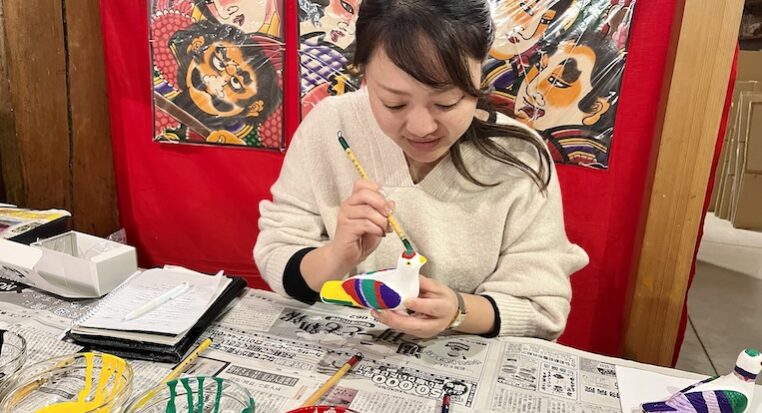
I’ve been writing about Japan for four decades. And, honestly, some of my most vivid memories have come when I stopped running between tourism venues and sat down long enough to learn Japanese handicrafts. From indigo dyeing in Iwate to making creative designs with Japanese paper, small workshops that welcome foreigners as well as locals gave me the confidence write about global cultural analysis that time spent in a museum could never equal. Also, in a very subtle way, workshops showed me how patience, tradition, and craftsmanship combine in a way that allows you fresh insights into Japan’s traditional life.
A Culture Built Around Craftsmanship
Japan considers its traditional crafts more than just a hobby. Back in 1955, it became the first country to designate its top artisans and performers as “Living National Treasures.” Today, the government also counts more than 240 products as Traditional Craft Products, among them ceramics, textiles, lacquerware, bamboo work, woodwork, washi paper, dolls, braided cords, even fishing lures.
As for food, Washoku, Japan’s traditional cuisine, landed on UNESCO’s Intangible Cultural Heritage list in 2013.
What I like most about handicraft and culinary workshops is that some of them can be completed in only a few hours. Of course, learning how to prepare and present a Japanese tea ceremony or make sushi dishes that look as good as they taste take much longer. The point is that to really learn you have to keep an open mind. In Fukui, for example, I immersed myself in the Samurai tradition of forging Echizen knives. After that, I went to the port town of Tomonoura in Hiroshima Prefecture and learned how to forge a pan of my own. Even when two crafts look much the same, they often are achieved differently from region to region.
The Patience Behind Japanese Craft
One of the workshops I remember most was for Edo kiriko, Tokyo’s faceted cut glass that always looks as if it’s sparkling even when the room is dimly illuminated. At Asakusa Ojima, Eiji Ojima, a third-generation artisan, explained how you position a glass piece against a spinning diamond-coated wheel. My own design, which resembled an unbalanced sunburst, looked embarrassingly amateurish next to the crisp pattern he made in seconds. Only after that experience did I finally understand that making handmade glass objects takes years to master. In retrospect that seems obvious since elaborate Edo Kiriko creations can easily cost hundreds of dollars.
Then again, kintsugi in Tokyo’s Nihombashi district felt almost like a different universe. Instead of making something brand-new, kintsugi teaches how to repair cracked or broken sculpture. I was told to fix a broken Arita ceramic bowl by repairing the cracks in a way that drew attention to the mending process. Traditional kintsugi, uses urushi lacquer mixed with gold, and it can take weeks to finish because each thin layer needs time to set properly. My winter workshop opted for quick-drying epoxy, so it didn’t take as long as normal, but the lesson I learned about moving deliberately was the same. In the end, I achieved the desired result by sanding the repaired area much longer than I initially thought would be necessary.
“We accent the weak point and then think it’s beautiful,” my instructor said, like it was no big deal. And that’s basically wabi-sabi in plain language, the Japanese idea that imperfection and impermanence are, somehow, part of the charm.
Discovering Japan Through Food
Food workshops gave me another perspective on local life. In Tokyo, I learned how to make taiyaki, the fish shaped snacks that are usually filled with sweet red bean paste. Then in Aomori, at Kanesa, a miso maker that goes back to 1875, I made my own Tsugaru — miso, made with mashed soybeans and stirred in rice mold with salt, and a bit of yeast.
And sure, I’ve also checked out workshops in Kyoto, Aomori, Ishikawa, Shizuoka, and Fukuoka, trying everything from calligraphy and flower arranging to bamboo crafts and traditional painting.
What These Experiences Taught Me
None of my studies made me an expert, but each in their own way left me with a respect for the years of apprenticeship, discipline and patience that sit behind Japanese craftsmanship. For me, that direct hands-on link is what makes travel news articles about Japan feel more real. An East-West News Service travel article is not just a list of places to visit. Stories are not limited to street addresses and hours of operation. The facts in the story are more important than the headline above it.