

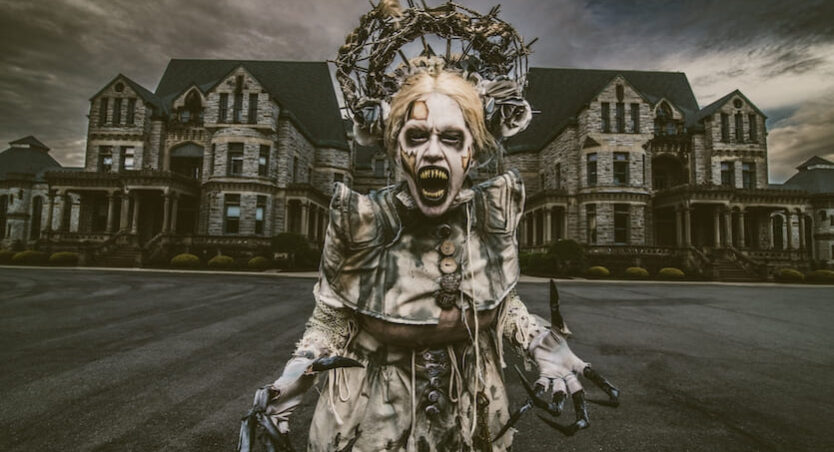
As I entered the Terror Ship at Portland’s Underhill Manor Haunted House, a frightening captain warned me that his crew had been trapped for fifty years and infected with a dangerous virus. His damaged face was barely visible in the darkness, and moments later, I found myself surrounded by knee-high fog and cries of “I’m infected!” Walking through the attraction alone made the experience even more unsettling.
Yet, beyond its frightening characters and sudden surprises, haunted houses reveal something fascinating about American entertainment, history, and culture. As one of the most unique seasonal experiences in North American travel, Halloween attractions transform historic buildings, create memorable experiences, and contribute to local economies. Underhill Manor is one of more than 3,000 haunted houses across the United States, many operating as charity events. It supports Portland’s Canon Shakespeare Company, while America Haunts estimates that these attractions generate approximately $300–500 million annually in ticket sales, contributing significantly to America’s Halloween economy.
The Evolution of Haunted House Attractions
Haunted houses have a surprisingly long history. Their roots are found in carnival freak shows, mirror attractions, and France’s Grand Guignol horror performances. In 1915, the Orton and Spooner Ghost House appeared at an Edwardian fair in Britain, introducing visitors to theatrical Scares.
The popularity of haunted attractions increased considerably when Disneyland introduced its Haunted Mansion ride in 1969. During the 1970s, the Jaycees began organizing haunted houses in abandoned buildings and open fields to raise money for charitable causes. Tom Hilligoss and Jim Gould, members of an Illinois chapter, even published a guidebook that sold 20,000 copies.
The Growing Influence of Horror Entertainment
By the 1980s, improved special effects and increasingly popular horror films had changed haunted attractions. Ira Kortum, cofounder of Underhill Manor, believes that horror cinema helped establish a lasting cultural interest in frightening entertainment. Haunted trails, elaborate mazes, and theatrical experiences gradually became more sophisticated, attracting audiences interested in costumes, makeup, and immersive storytelling.
Haunted Destinations All Over America
Across the United States, thousands of seasonal attractions draw thrill-seekers while generating hundreds of millions of dollars in regional ticket sales.
Some destinations depend on their historical reputations. Salem, Massachusetts, associated with the infamous witch trials of 1692, celebrates Halloween with costume events, haunted marketplaces, and special museum programs. In Mississippi, McRaven House welcomes visitors for candlelight tours exploring its reported paranormal history.
When Historic Prisons Become Haunted Attractions
Old penitentiaries provide particularly dramatic settings for Halloween entertainment. Ohio’s Mansfield Reformatory, constructed in 1886, became Blood Prison after its closure in 1990 following concerns about inhumane conditions. Its imposing Gothic architecture creates an unsettling atmosphere before visitors even enter.
The attraction draws more than 35,000 visitors annually, contributing over $5 million to the local economy. Philadelphia’s Eastern State Penitentiary also transforms its historic cellblocks into Halloween experiences, including a speakeasy inside Al Capone’s former cell.
Why Do People Enjoy Being Frightened?
During my visit to Underhill, I encountered Whitney Vossen and Jordan Scrivner, a couple who discovered their shared enthusiasm for haunted houses during their early relationship. Scrivner particularly enjoyed the suspense and performances delivered by convincing actors.
Psychology professor Frank McAndrew describes this attraction as “recreational fear,” a combination of excitement, surprise, and controlled fear. These experiences stimulate adrenaline while allowing visitors to recognize that the danger is imaginary.
Haunted houses can also influence personal confidence. Christina Kortum, Underhill’s cofounder, once worked in information technology before discovering her passion for frightening audiences. Her experience eventually inspired her to establish Ravenous Studios, a special effects makeup company.
Halloween’s Cultural and Financial Role
Halloween has become America’s second-largest retail holiday after Christmas. The National Retail Federation projected spending above $12.2 billion in 2023, reflecting growing enthusiasm for costumes, decorations, and seasonal entertainment.
For places such as Salem, Halloween tourism creates substantial economic opportunities. The city welcomed around 2.6 million visitors during October, compared with 586,000 in September. Haunted attractions therefore contribute not only entertainment but also employment and local business activity.
Halloween and Day of the Dead
Although Halloween and Día de los Muertos occur around the same time, their meanings differ. The Day of the Dead originated among Indigenous communities, including the Aztecs and Nahua people, as a celebration honoring deceased loved ones.
Colorful altars are made, sugar skulls are decorated, and marigolds are used to attract spirits. While Halloween leans into frights and horror themes, Día de los Muertos focuses on remembrance, family bonds, and honoring the ongoing existence of loved ones.
A Celebration of Fear and Creativity
After decades in the industry, Christina Kortum describes haunted houses as “improvised theater at a giant level.” Her remark reflects their change from simple philanthropic attractions into elaborate performances combining acting, technology, and imagination.
Visiting a haunted house can bring heart-pounding scares, sudden shocks, and nervous laughter. Ultimately, it demonstrates how entertainment brings people together, turning fear into a shared celebration.
For a deeper exploration of this journey, read the full article: